Notes
What Is Performance Max, and When Should You Trust It?
Performance Max, or PMax, is a goal-based Google Ads campaign type that runs across all of Google's inventory, Search, Display, YouTube, Gmail, Discover and Maps, from one campaign. You supply conversion goals, a budget, assets and optional audience signals. Google's automation decides who sees which ad, where, and at what bid.
Key takeaways
- PMax optimizes ruthlessly toward whatever you call a conversion. That definition decides the result more than any setting inside the campaign.
- In lead generation, cheap junk conversions are nearly infinite. Feed PMax form fills and it will find form fillers on the cheapest inventory.
- You control goals, budget, assets, exclusions and geography. Automation controls targeting, bids, placements and query matching.
- PMax belongs next to Search as the reach layer, not in place of it.
- Exclude brand terms, cap the budget until it proves incremental results, and judge it on cost per verified outcome after the learning period.
Contents
- What is a Performance Max campaign?
- How it works
- What you control and what automation controls
- The conversion diet decides everything
- Setup choices that matter, and the ones that do not
- Where PMax belongs in the account
- What goes wrong, and how it shows up
- What it costs to fix, by route
- Keep it, fix it, or switch it off
- How I clean one up
- Check what it is eating before you judge it
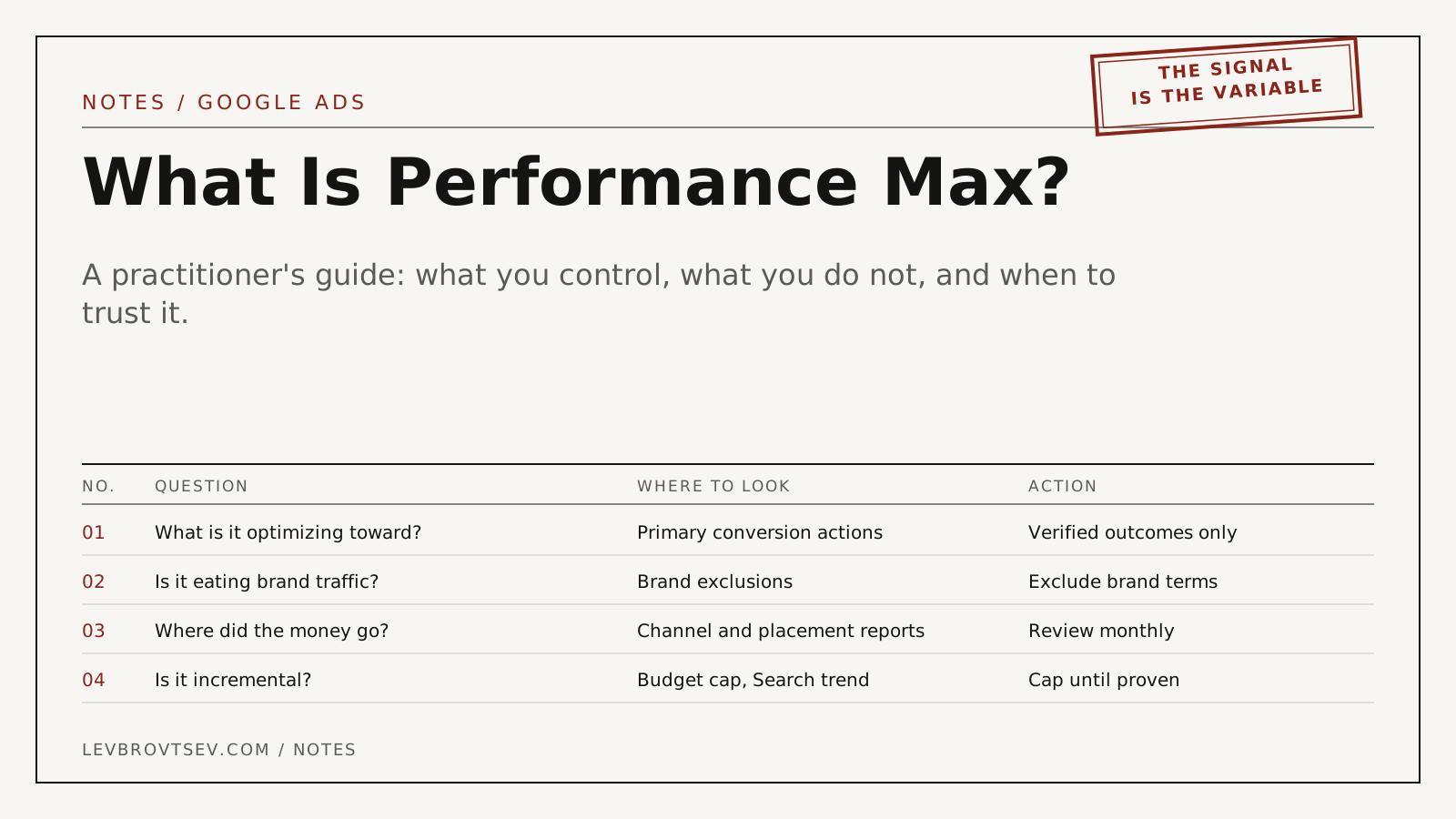
Someone turned on Performance Max in your account. Perhaps a Google rep recommended it, perhaps the agency did. Conversions went up and cost per conversion went down. The phone did not ring more. Now you are trying to work out whether the campaign is brilliant or a black box that spends your money on YouTube views in another state.
It can be either. The difference is almost entirely what you feed it.
What is a Performance Max campaign?
A Performance Max campaign is a single Google Ads campaign that serves ads on every Google surface and uses automation for targeting, bidding and ad assembly, steered by the conversion goals you set. Google's own description is under about Performance Max.
How it works
You define the outcome: conversion goals and their values. You hand over raw materials: headlines, descriptions, images, video, and for retailers a product feed. You can point the machine with audience signals, which are hints and not targeting. Automation then assembles ads for each surface and moves spend toward whatever converts.
You give up query-level and placement-level control. You gain reach that no manual structure can buy. Whether that is a good trade depends on the next two sections.
What you control and what automation controls
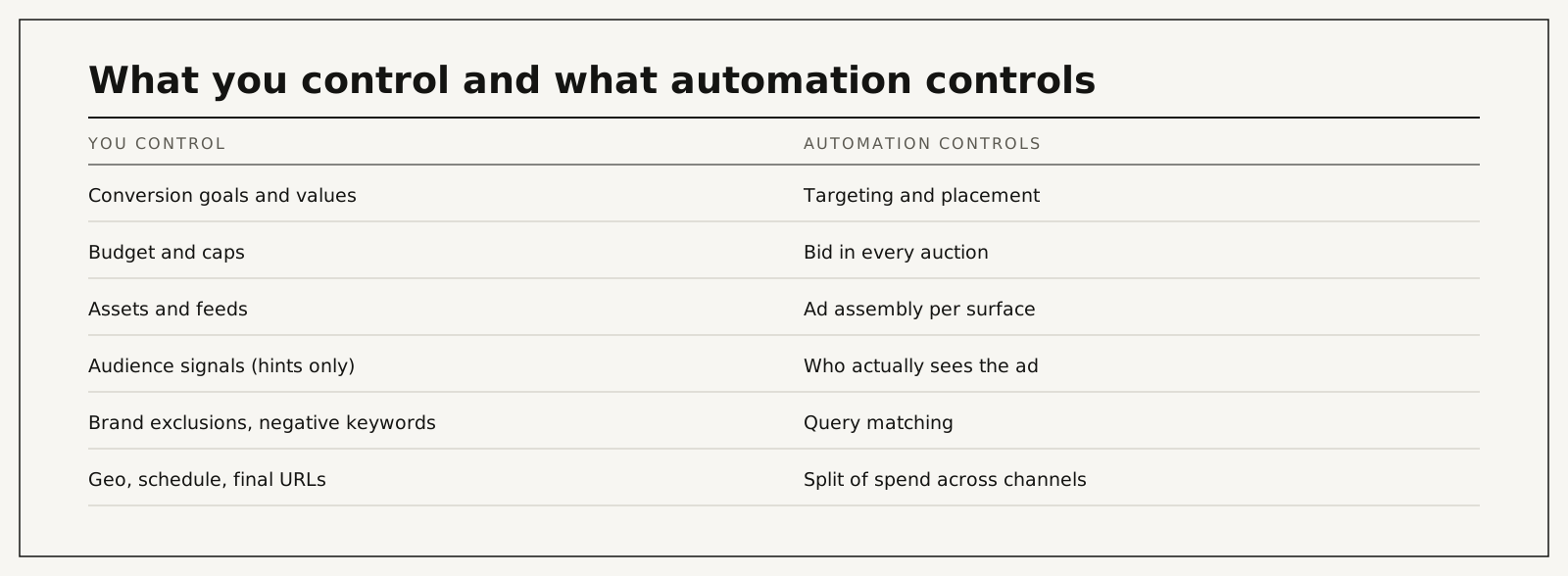
| You control | Automation controls |
|---|---|
| Conversion goals and values | Targeting and placement |
| Budget and caps | The bid in every auction |
| Assets and feeds | Ad assembly per surface |
| Audience signals, as hints | Who actually sees the ad |
| Brand exclusions and negative keywords | Query matching |
| Geography, schedule, final URLs | How spend splits across channels |
Reporting has improved. You can now see more about channels, search terms and placements than in the early years. Treat those reports as a way to spot problems, not as levers. The real levers are in the left column.
The conversion diet decides everything
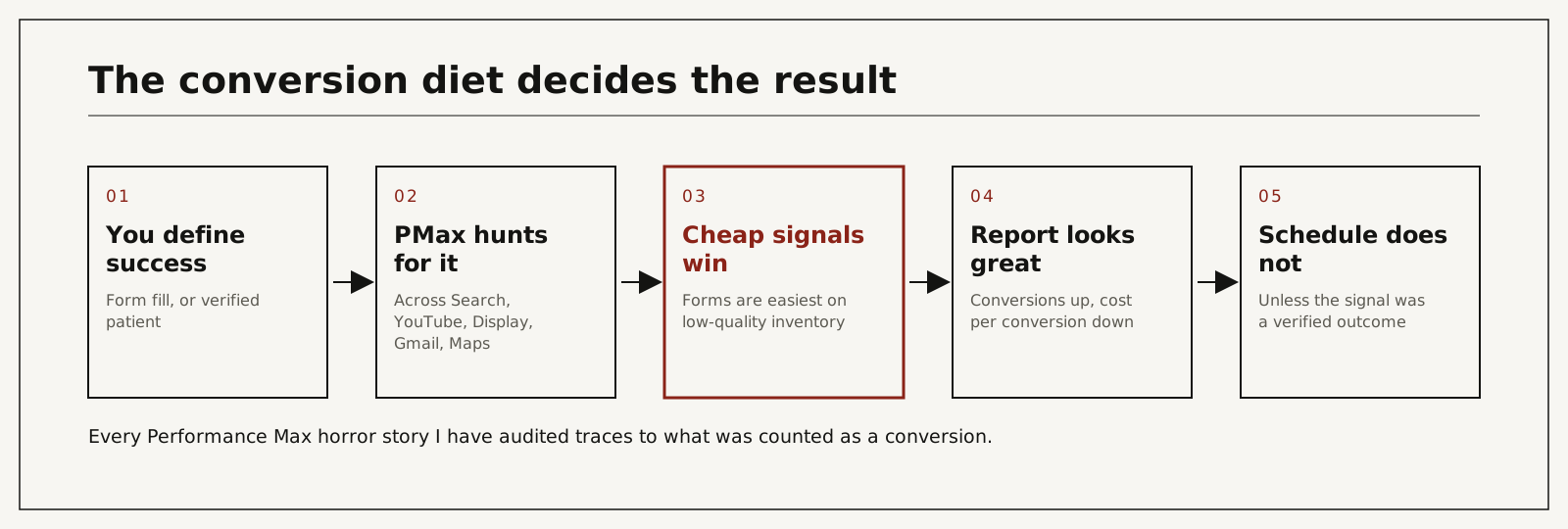
PMax finds the cheapest path to whatever you defined as success. If success is a form submission, the cheapest path runs through low-quality Display and video inventory, accidental taps, bots and people who will never book. The campaign is not broken. It is doing exactly what it was asked to do.
Feed it imported, verified outcomes, such as attended consultations, qualified opportunities or closed revenue, and it hunts those. This is the single biggest quality lever you have in PMax, and it matters twice as much in lead generation as in e-commerce, where a purchase is hard to fake. I explain the mechanism in Smart Bidding on an incomplete signal. If your browser-side tracking is in doubt, start with the conversion tracking guide.
Setup choices that matter, and the ones that do not
What matters:
- Primary versus secondary conversion actions. One verified outcome as primary. Forms, calls and clicks as secondary.
- Asset groups organized by the economics of each service, so a $15,000 procedure is not competing for budget with a $200 one.
- Brand exclusions, so PMax does not claim brand searches that your Search campaign or your organic listing already wins. I show what that looks like in Performance Max and brand cannibalization.
- A budget cap while it proves it adds customers and is not just relabelling ones you already had.
- Tight geography, with "presence" and not "presence or interest" for local services.
- Final URL expansion, reviewed. Left open, PMax may send traffic to your careers page or an old blog post.
What matters less than forums claim:
- Audience-signal micro-tuning. It is a hint.
- Endless creative swaps before the learning period has finished.
- Asset "strength" scores. They measure variety, not results.
Google's recommendations are under Performance Max best practices. Read them knowing that Google's incentive is for you to give automation more room.
Where PMax belongs in the account
As the reach layer next to Search. Search is control: you choose the queries, you see them, you can exclude them. PMax is reach: it finds people you would not have targeted. Established lead-generation accounts usually run both, with Search carrying the high-intent terms and PMax capped until it shows incremental verified outcomes. The full decision rule, including why blended click-through rate falls in PMax-led accounts and why that is not a regression, is in Performance Max vs Search for high-ticket services.
For choosing between PMax and Demand Gen: Demand Gen is for creating demand on visual surfaces, PMax for capturing it across everything.
In healthcare, remember that Google's personalized advertising policy limits how sensitive health categories can use audience data. Your own customer lists and remarketing audiences may be ineligible as signals. That is one more reason the conversion signal carries the weight.
What goes wrong, and how it shows up
| Cause | What actually happens | Hidden cost | What you see in reports | Risk level |
|---|---|---|---|---|
| Form fills or page views as primary | PMax buys the cheapest form fillers | Budget drifts to junk inventory | Conversions up, enquiries flat, placements full of apps | High |
| No brand exclusions | PMax takes credit for brand searches | It looks like your best campaign while adding nothing | Excellent cost per conversion, falling brand Search volume | High |
| Geography set to presence or interest | Ads shown to people far outside your area | Enquiries you cannot serve | Leads from other states | Medium |
| Final URL expansion left open | Traffic sent to irrelevant pages | Clicks that could never convert | Landing page report shows blog and careers pages | Medium |
| One asset group for every service | High-value services starved by cheap ones | Volume grows where margin is lowest | Conversions concentrated in low-value services | Medium |
| Budget moved from Search to PMax all at once | Loss of query-level control | High-intent terms under-served | Search impression share falls | High |
| Judged in week one | Panic edits restart learning | It never stabilizes | Frequent changes in the change history | Medium |
What it costs to fix, by route
Market figures were checked in September 2026 for the US and Canada. They are ranges, not quotes.
| Route | Typical cost | Time to a trustworthy campaign | What it depends on |
|---|---|---|---|
| You adjust settings using this guide | Your time | Days for settings, then two to six weeks of learning | Access and confidence in the interface |
| Your agency restructures it | Usually inside the retainer, which for most agencies is 10% to 20% of ad spend | Depends on their queue | Whether they are willing to report on verified outcomes |
| I clean it up | Audit at $500 per ad account, credited toward the first month. The cleanup is a fixed quote from the audit, or part of my $5,000 a month management retainer | Scoped in the audit, plus the learning period | Conversion tracking state, number of services, CRM access |
| Leave it | No invoice | Never | It keeps optimizing toward the wrong thing, efficiently |
Keep it, fix it, or switch it off
| Option | Cost | Time to result | Risk | When it makes sense |
|---|---|---|---|---|
| Keep as is | None | None | Compounding if the signal is wrong | Only if primary conversions are already verified outcomes |
| Fix the signal and the structure | Low to medium | Two to six weeks | A temporary dip while it relearns | Most accounts |
| Pause PMax and rebuild on Search first | Low | Fast | Less reach for a while | Tracking is broken or budgets are small |
| Put everything into PMax | None | None | Loss of control over your best queries | Almost never for lead generation |
Agencies are often right to recommend PMax. Where I disagree is when it is switched on without fixing what it learns from, because the reported numbers will look wonderful either way.
How I clean one up
- I check what is marked primary and what those actions really record.
- I reconcile last month's conversions against real enquiries and, where possible, attended consultations.
- I add brand exclusions and check brand Search volume before and after.
- I tighten geography and review final URL expansion.
- I split asset groups by service economics.
- I connect a verified CRM stage and, after about 30 clean days, make it the primary signal.
- I cap the budget and raise it only when cost per verified outcome holds.
On accounts with verified conversion imports and disciplined structure, PMax has been a workhorse for me. It carries significant budget on my current six-figure healthcare program. That program is where the one result I quote comes from: I inherited an underperforming account and rebuilt it; cost per acquisition came down by about 78% while spend grew. On accounts optimizing to form fills, PMax is the fastest way to spend more for less. The campaign type is not the variable. The signal is.
The audit covers your ad account, the tracking and the path from enquiry to booked patient, and ends with a 90-day plan. It is credited toward the first month if you continue with me.
You work with me directly. There are no account managers and no juniors.
If you would like to know what your PMax campaign is really buying, that is what a Performance Max cleanup starts with. The audit is $500 per ad account, comes with a 90-day plan, and is credited toward the first month if you continue with me. You talk to the person who will do the work. Book a call or write first.
Check what it is eating before you judge it
Open the conversion settings before you open the campaign. If the primary action is a form, a click or a page view, Performance Max has been hunting those, and no asset or audience change will fix it. Give it one verified outcome, exclude your brand, cap the budget, and wait out the learning period. Then judge it. If you want a second opinion first, start with the audit.
Frequently asked questions
Is Performance Max better than Search campaigns?
Neither is better. Search is control and PMax is reach. Established accounts run both, with the split decided by intent and by how good the conversion signal is.
Why is Performance Max spending on Display and YouTube junk?
Because those surfaces are in its mandate and something there is producing whatever you defined as a conversion. Fix the definition, with verified outcomes as primary, before blaming the surfaces.
How long is the Performance Max learning period?
In practice two to six weeks, depending on conversion volume. Judge it on cost per verified outcome after learning, not on week-one noise.
Does Performance Max work for local service businesses?
Yes, particularly with Maps inventory, given tight geographic settings, verified conversion goals and a budget cap until it proves incremental booked customers.
Can I add negative keywords to Performance Max?
Yes, within limits. I cover what you can and cannot block in a separate note on PMax negative keywords. Brand exclusions are the first ones to add.
What does it cost to fix a Performance Max campaign?
The settings cost only time. The real work is the conversion signal. Agencies usually handle it inside a retainer of 10% to 20% of spend. My audit is $500 per ad account and the cleanup is quoted from it.
Who does the work?
I do: the audit, the restructure, the tracking and the reporting. Nothing is handed to a junior or subcontracted.
How do I verify it is working?
Put PMax conversions next to CRM outcomes for the same month, watch brand Search volume after adding exclusions, and read the landing page and placement reports monthly. If verified outcomes rise with spend, keep it. If only form counts rise, it is feeding on the wrong thing.