Notes
What Healthcare Marketing Costs: Retainers, Percentage of Spend, Audits
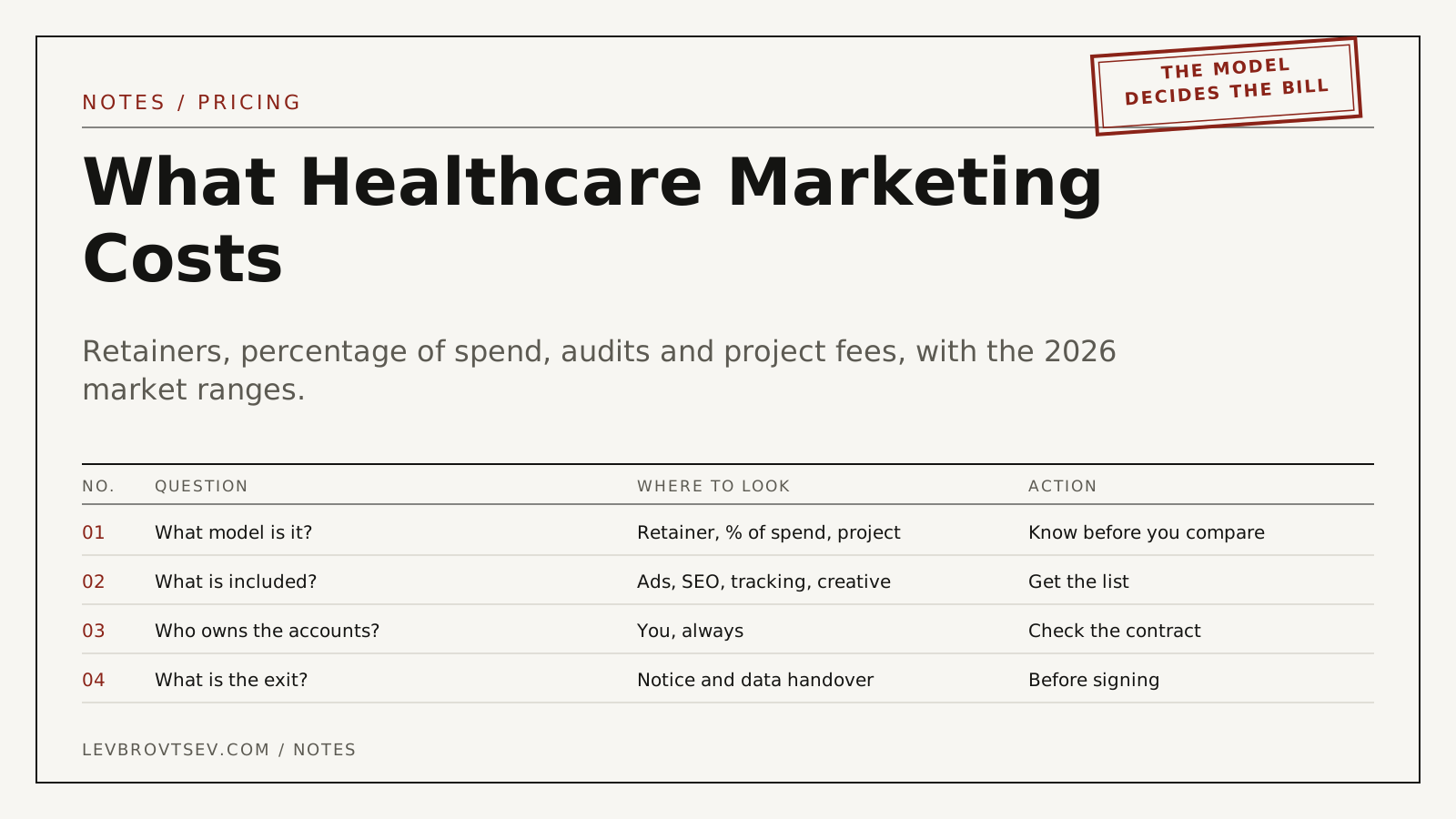
Healthcare marketing is sold four ways: a percentage of ad spend, a flat monthly retainer, a one-time audit or setup fee, and project work. In 2026 the common ranges are 10% to 20% of spend, $2,500 to $7,500 a month for mid-sized accounts, and $500 to $5,000 for one-time setup, rising to $10,000 for complex builds. What changes the total is not the rate. It is what the number includes.
Key takeaways
- Two quotes are only comparable once you list what each excludes.
- Percentage-of-spend pricing pays the supplier more when you spend more. Know that before you sign.
- Ad spend, landing pages, call tracking and creative are usually separate lines.
- Your own team's hours are the cost nobody puts on a proposal.
- Ask for the price of the thing you actually need first, not the package.
Contents
Two proposals arrive. One says fifteen percent of ad spend. One says five thousand a month. Which is cheaper depends entirely on numbers neither document mentions.
How healthcare marketing is priced
Healthcare marketing is priced either as a share of media spend, as a flat monthly fee for a defined scope, or as a one-time fee for a specific piece of work such as an audit or a tracking build. Most suppliers use a combination: a setup fee, then an ongoing fee in one of the first two forms.
The four models
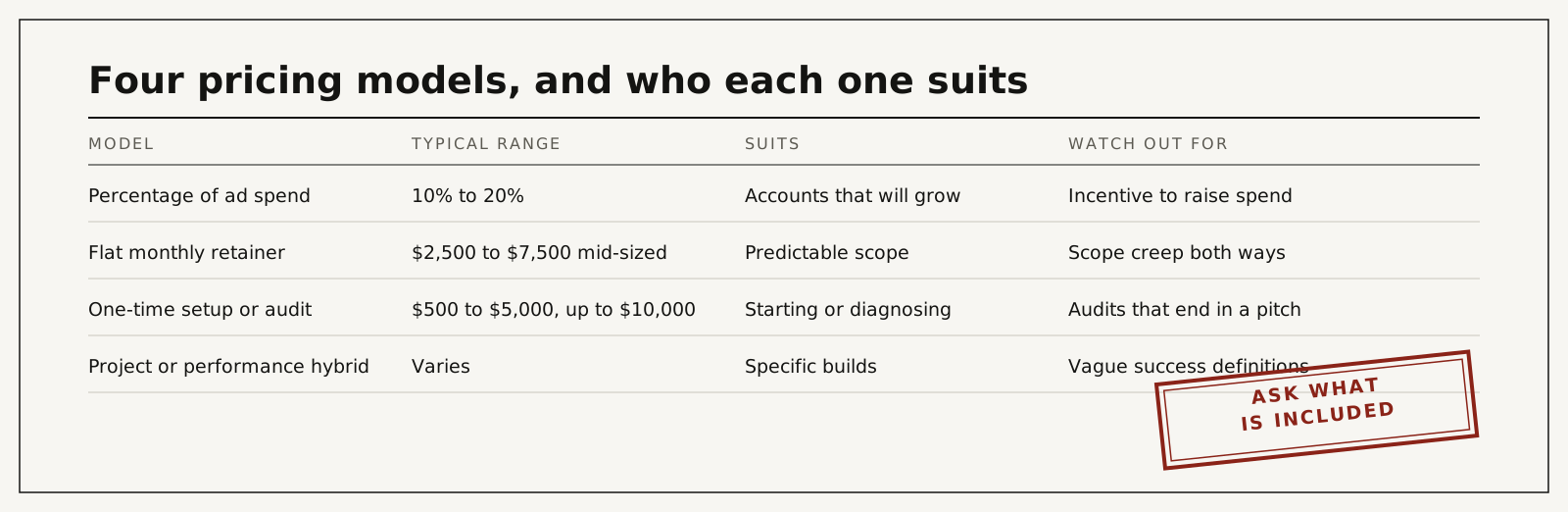
| Model | Typical range | Suits | Watch out for |
|---|---|---|---|
| Percentage of ad spend | 10% to 20% | Accounts expected to grow | The supplier earns more when you spend more |
| Flat monthly retainer | $2,500 to $7,500 for mid-sized accounts | Predictable scope | Scope creep in both directions |
| One-time audit or setup | $500 to $5,000, up to $10,000 for complex accounts | Starting out, or diagnosing | Audits designed to end in a pitch |
| Project or hybrid | Varies | A specific build | Vague definitions of success |
A fifth model, pure performance pricing, comes up occasionally in healthcare. It rarely survives contact with the field: the supplier does not control the front desk, the schedule or the clinician, and defining a "patient" tightly enough to pay on is harder than it sounds.
What the ranges are in 2026
These come from published 2026 price guides for the US and Canada, checked in September 2026. They are ranges, not quotes, and they are compiled from vendor material rather than from a survey with a stated method. Treat them as a sanity check, not a benchmark.
| Item | Typical range |
|---|---|
| Ongoing management, percentage model | 10% to 20% of ad spend |
| Ongoing management, flat retainer | $2,500 to $7,500 a month, mid-sized accounts |
| One-time setup or account build | $500 to $5,000, up to $10,000 for complex accounts |
| Tag manager and tracking specialists, hourly | $20 to $49 on Upwork, median $30 |
| Senior US consultants, hourly | $85 to $175 |
| AI visibility audit | $500 to $2,000 light, $2,500 to $10,000 deep |
| AI visibility program, monthly | $1,500 to $10,000 |
Costs that rarely appear on the proposal
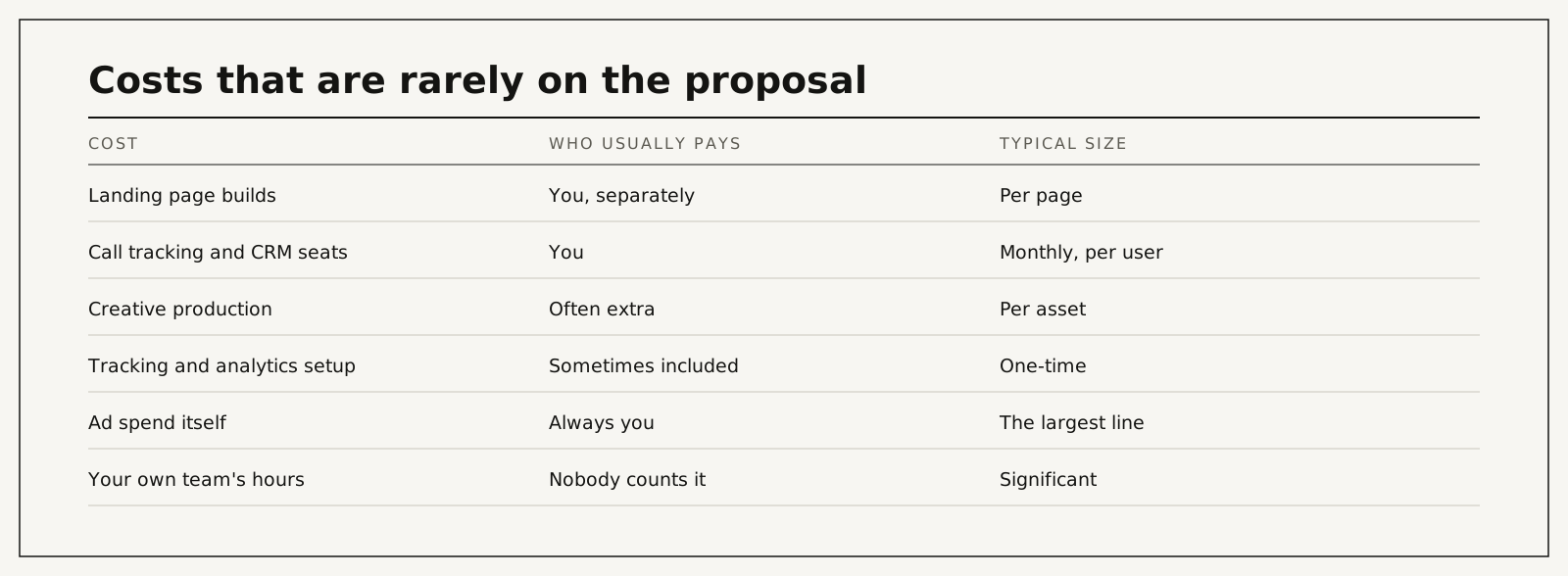
| Cause | What actually happens | Hidden cost | What you see | Risk level |
|---|---|---|---|---|
| Landing page builds quoted separately | Campaigns wait on pages | Launch delayed, spend idle | "Pages are an additional scope" | Medium |
| Call tracking and CRM seats | Monthly per-user fees you pay directly | A few hundred a month unbudgeted | Tool invoices arriving separately | Low |
| Creative production | Charged per asset or per month | Meta budgets underfunded | "Creative is not included" | Medium |
| Tracking and analytics setup | Sometimes included, often not | The most important work becomes optional | No tracking line in the proposal | High |
| Compliance rework | Disapprovals require page and copy changes | Weeks lost in regulated categories | Not mentioned at all | Medium |
| Your team's hours | Approvals, assets, meetings, front desk changes | Real, and never counted | Nothing on paper | Medium |
The tracking line is the one to press hardest on. If measurement is an optional extra, every other number in the proposal is unverifiable, which is the argument in patient acquisition cost.
How to compare two quotes
- Convert both to a total monthly cost at your actual ad spend, including setup amortised over twelve months.
- List what each excludes: pages, creative, tracking, tools, compliance work.
- Ask both what happens to the fee if spend halves, and if it doubles.
- Ask both for the reporting metric in writing. Cost per attended patient, or something else.
- Check who owns the ad accounts and what the notice period is.
- Only then compare the numbers.
Most of the time the cheaper headline is not the cheaper engagement. The decision framework for which shape of supplier you need is in healthcare marketing agency vs consultant.
What I charge, and why
The audit is $500 per ad account. It covers the account, the tracking and the path from enquiry to booked patient, ends with a 90-day plan, and is credited toward the first month if you continue with me. It exists so you can see how I work before committing to anything ongoing.
Management is a flat retainer from $5,000 a month, adjusted to budget and workload. Flat rather than a percentage, deliberately: I want to be able to tell you to spend less without it costing me money. Ad spend, tools and creative production are yours and are paid directly by you.
Under roughly $10,000 a month in ad spend, a retainer rarely pays for itself. In that case I will say so and suggest the audit plus a fixed project instead.
The audit covers your ad account, the tracking and the path from enquiry to booked patient, and ends with a 90-day plan. It is credited toward the first month if you continue with me.
You work with me directly. There are no account managers and no juniors.
Red flags in a quote
- No tracking or measurement line at all.
- A twelve-month minimum term with no performance condition.
- Ad accounts created and owned by the supplier.
- "Guaranteed" patient numbers or rankings.
- A free audit that turns out to be a slide deck of screenshots.
- No named person who will be in the account.
- Reporting defined only as "monthly report".
Price the problem, not the package
Decide what you actually need first: a diagnosis, a build, or ongoing management. Then ask each supplier to price that one thing. Packages are priced to be hard to compare, and the comparison is where all the value in this decision sits. If you want a diagnosis before you buy anything ongoing, start with the audit.
Frequently asked questions
How much does healthcare marketing cost per month?
Management typically runs 10% to 20% of ad spend, or $2,500 to $7,500 a month for mid-sized accounts, with ad spend on top. My retainer starts at $5,000 a month, adjusted to budget and workload.
Is a percentage of spend or a flat fee better?
A flat fee removes the incentive to grow your budget, and makes costs predictable. A percentage can be cheaper at small spend and more expensive as you scale. Ask what happens at half and double your current budget.
What should an audit cost?
Published ranges run from $500 for a light review to $10,000 for a deep one. Mine is $500 per ad account and includes a 90-day plan. Be careful with free audits: they are usually sales documents.
Does the fee include ad spend?
Almost never. Ad spend is a separate line paid by you, directly to the platform, and it is normally the largest cost in the engagement.
What is the minimum budget worth managing?
Below roughly $10,000 a month in ad spend, most retainers consume too much of the total. A fixed project plus good internal execution usually beats paying for management.
Why do quotes vary so much?
Because they include different things. Two quotes can differ threefold and both be fair once you list pages, creative, tracking and tools.
Who does the work if I hire you?
I do. Strategy, campaign builds, tracking and reporting. Nothing is subcontracted or delegated.
How do I know I am getting value?
One number, monthly: cost per attended patient by procedure, against the ceiling you set from your own margin. If it is inside that ceiling and volume is rising, the fee is working.