Notes
Healthcare Marketing Agency or Consultant: How to Choose
An agency gives you capacity: several people, several disciplines, and continuity when someone leaves. A consultant gives you depth: one experienced person on a narrow problem, reachable the same day. The honest question is not which is better. It is how many hands your situation needs and how deep the problem goes.
Key takeaways
- If you need a website, creative, social, SEO and ads at once, an agency is the right shape.
- If the problem is "we spend and the schedule does not fill", that is usually depth, not capacity.
- Ask who will actually be in the account daily, and get names and hours in writing.
- The single best filter: can they report cost per attended patient, from your CRM?
- Contract terms matter more than the pitch. Account ownership, notice period, data handover.
Contents
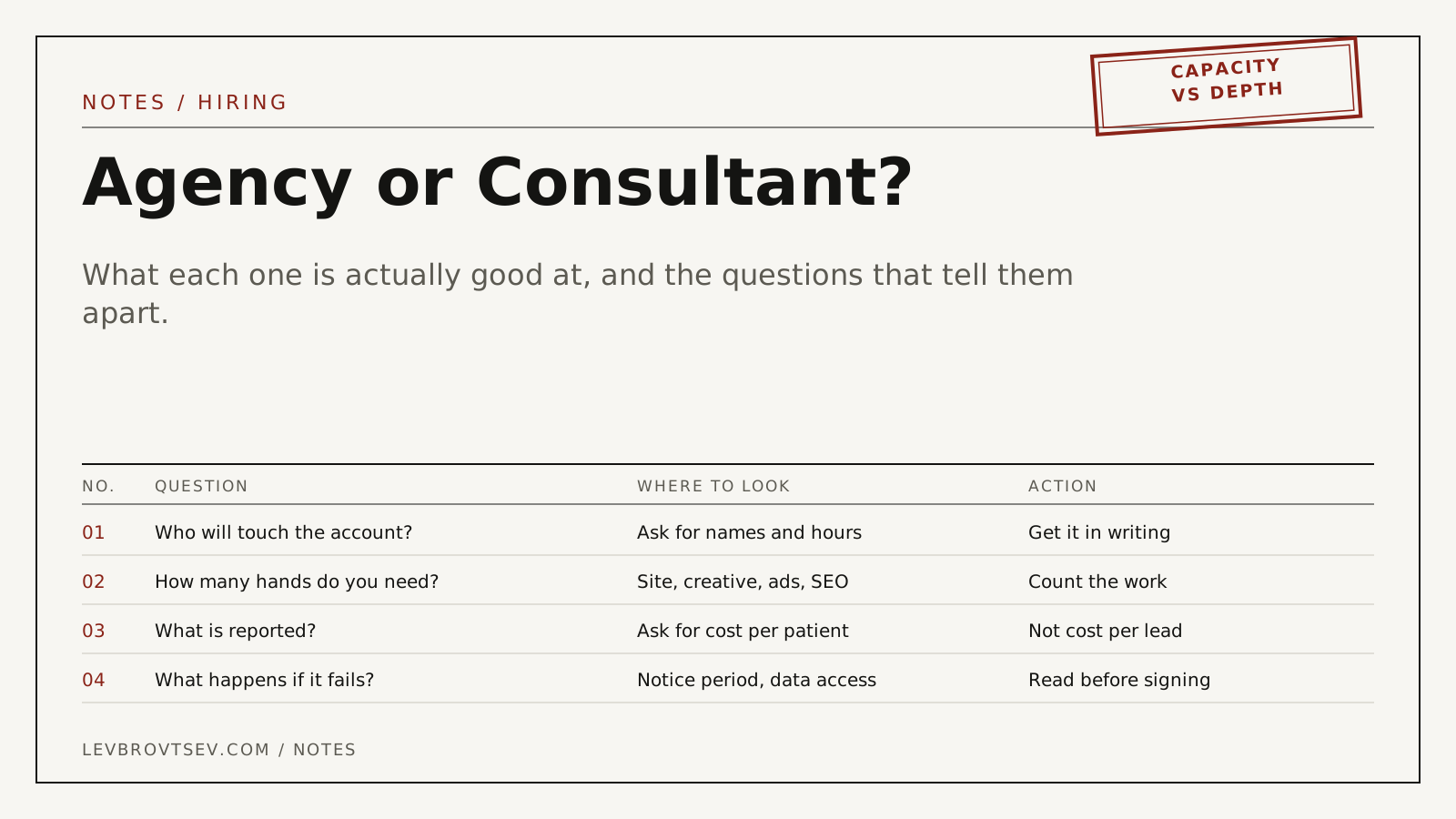
You are sitting with two proposals. One is from a healthcare marketing agency with a team page and case studies. One is from an independent consultant. Both sound competent, both quote similar money, and neither document tells you what you actually want to know: who will do the work, and how you will know it worked.
I am one of the two options on that table, so read this knowing that. I have tried to write the version I would want if I were choosing.
What is the real difference?
The difference is capacity versus depth. An agency can staff twenty locations, produce creative weekly and cover five disciplines at once. A consultant can go deeper on a smaller number of things and is usually the person you spoke to in the sales conversation.
Everything else people argue about, price, reporting quality, responsiveness, varies more within each category than between them. There are excellent agencies and careless consultants.
Side by side
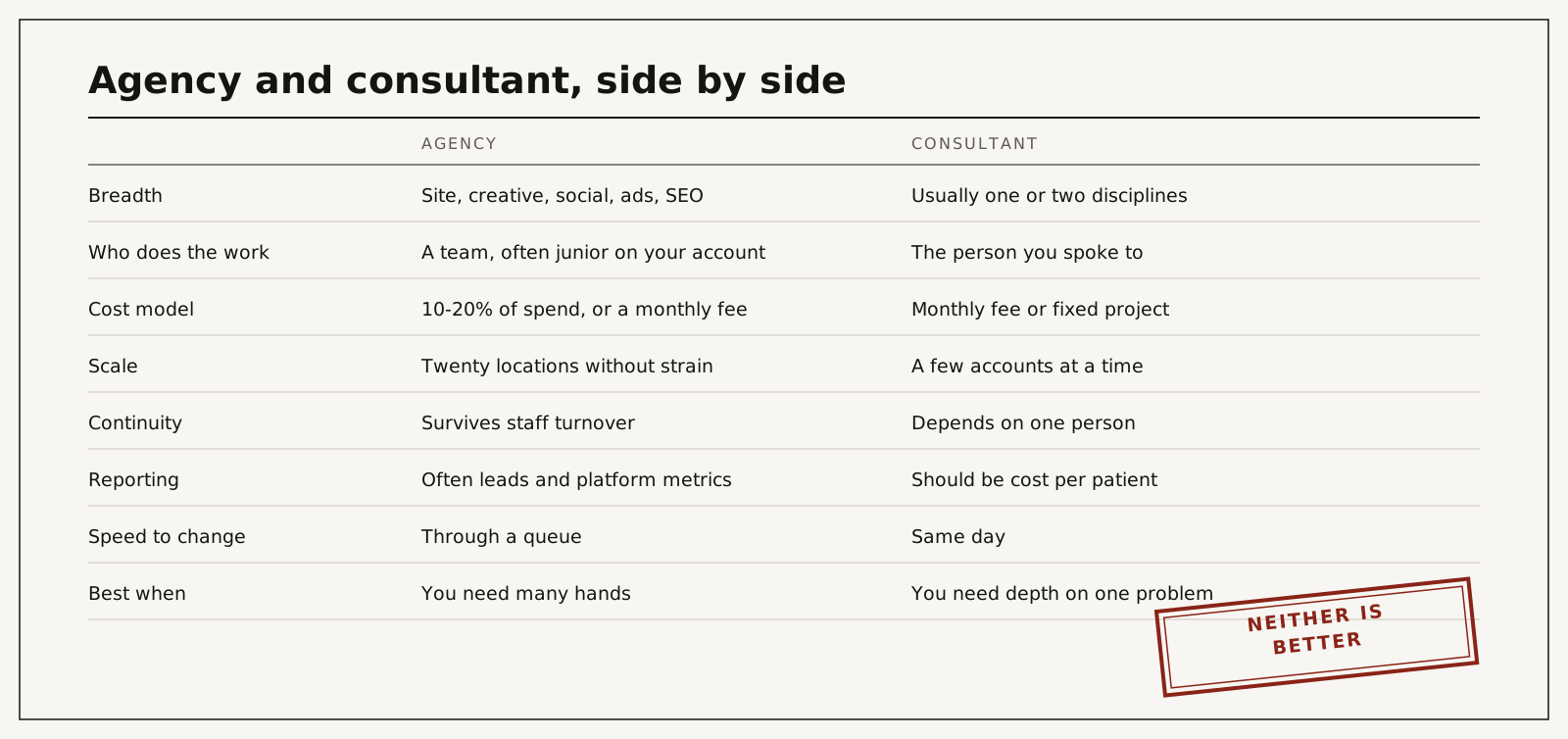
| Agency | Consultant | |
|---|---|---|
| Breadth | Site, creative, social, ads, SEO | Usually one or two disciplines, deeply |
| Who does the work | A team, often with junior staff on your account | The person you spoke to |
| Cost model | 10% to 20% of ad spend, or a monthly fee | Monthly retainer or a fixed project |
| Scale | Handles many locations without strain | A few accounts at a time |
| Continuity | Survives staff turnover | Depends on one person |
| Reporting | Often leads and platform metrics | Should be cost per attended patient |
| Speed of change | Through a queue and an account manager | Same day, directly |
| Risk | Your account is one of many | Key person risk |
When an agency is the better answer
Choose an agency when the work needs many hands at once: a new website plus photography plus social plus ads before a location opens. When you have several locations and need consistent execution across them. When continuity matters more than depth, because you cannot afford for one person's holiday to stop the account. When your internal team is small and you want one supplier to coordinate rather than four.
Also choose an agency if you genuinely want creative volume. A consultant producing thirty assets a month is either subcontracting or lying.
When a consultant is the better answer
Choose a consultant when the problem is narrow and expensive: cost per patient is wrong, tracking does not match the CRM, an account was inherited and nobody can explain it. When you want the person who plans the work to be the person doing it. When you need someone who will tell you to spend less, which is easier for someone whose fee does not scale with your media budget.
And when the constraint is not traffic at all. Most practices I open have more to gain from answering enquiries faster than from buying more of them, which is the argument in how to get more patients.
Nine questions that tell them apart
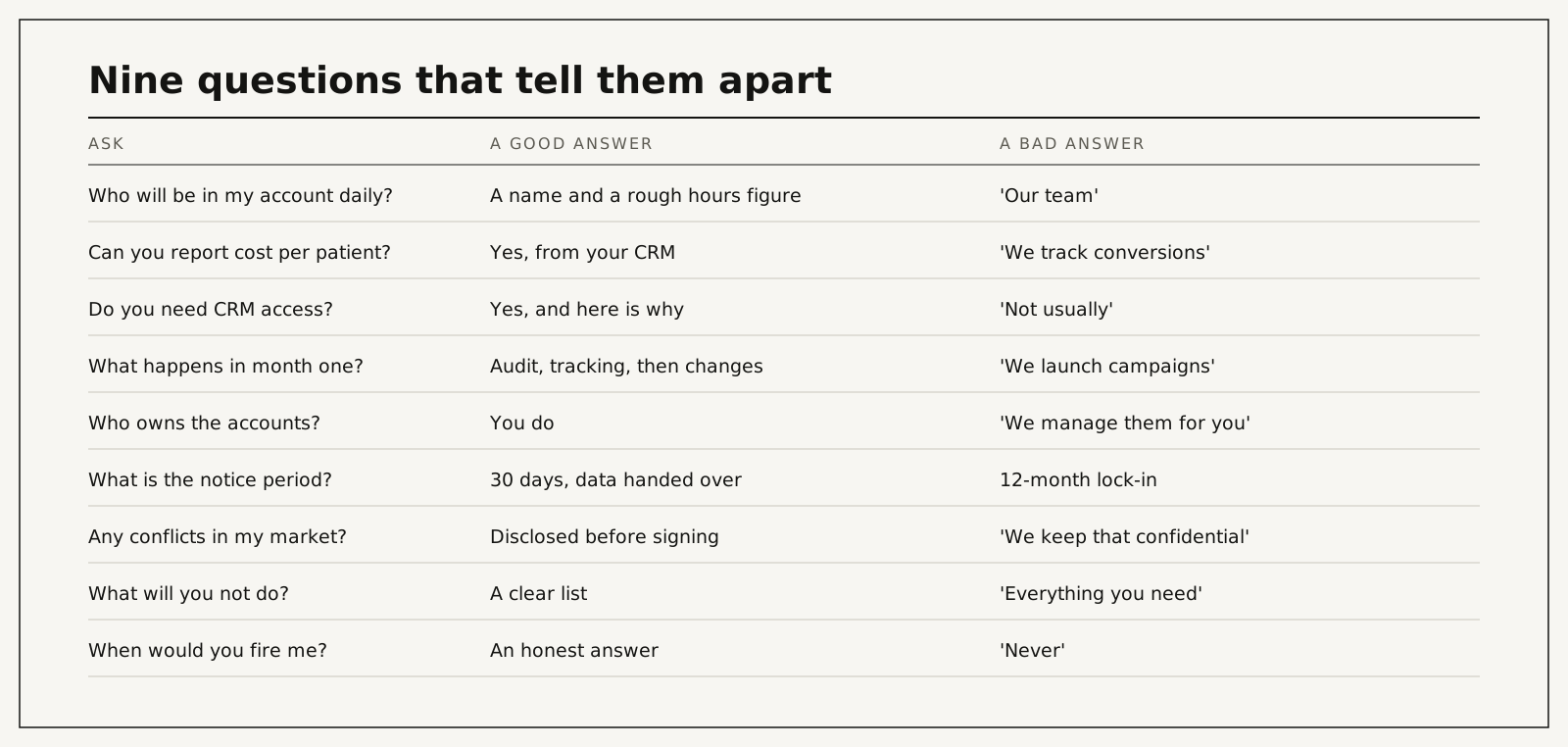
| Ask | A good answer sounds like | A bad answer sounds like |
|---|---|---|
| Who will be in my account daily? | A name, a role and a rough hours figure | "Our team" |
| Can you report cost per attended patient? | Yes, from your CRM, and here is how | "We track conversions" |
| Do you need CRM access? | Yes, and here is why | "Not usually" |
| What happens in month one? | Audit, tracking, then changes | "We launch campaigns" |
| Who owns the ad accounts? | You do | "We manage them under our MCC" |
| What is the notice period? | 30 days, with data handed over | A twelve-month lock-in |
| Any conflicts in my market? | Disclosed before signing | "That is confidential" |
| What will you not do? | A clear list | "Whatever you need" |
| When would you tell me to stop? | A real answer about budget floors | Silence |
The CRM question is the sharpest filter in the list. An agency that has never asked for CRM access is reporting on form fills, whatever the deck says. I take that apart in cost per patient versus cost per lead.
What each one costs
Market figures were checked in September 2026 for the US and Canada. They are ranges, not quotes.
| Route | Typical cost | What it usually includes | What it usually does not |
|---|---|---|---|
| Healthcare marketing agency | 10% to 20% of ad spend, or $2,500 to $7,500 a month for mid-sized accounts, plus one-time setup of $500 to $5,000 | Ads, reporting, often SEO and creative | Ad spend, landing page builds, call tracking |
| Independent consultant | A monthly retainer or a fixed project | Strategy, builds, tracking, reporting | Creative volume, design, development |
| Freelancer by the hour | $20 to $49 on Upwork for tag and tracking work, median $30; senior US consultants $85 to $175 | A specific task | Ownership of the outcome |
| My own model | Audit at $500 per ad account with a 90-day plan, credited toward the first month. Retainers from $5,000 a month, adjusted to budget and workload | Google, Microsoft, Meta, SEO and the tracking under them | Ad spend, creative production at volume |
One structural note on percentage pricing. When the fee is a share of ad spend, the supplier is paid more when you spend more. That is not automatically a problem, but it means advice to reduce spend will never be cheap for them to give.
The contract terms that matter
| Cause | What actually happens | Hidden cost | What you see | Risk level |
|---|---|---|---|---|
| Accounts owned by the supplier | You cannot take your history with you | Years of learning lost at the switch | "We will create the account for you" | High |
| Twelve-month lock-in | You pay for months you have already written off | The cost of being wrong doubles | A minimum term in clause four | High |
| No named person | Work drifts to whoever is free | Quality varies month to month | "Our team" in every answer | Medium |
| Reporting defined as "monthly report" | Nobody agreed what is in it | Impressions and clicks forever | No named metric in the contract | Medium |
| No conflict disclosure | Your competitor may share your strategist | Awkward at best | The question deflected | Medium |
| Data not handed over on exit | You leave with nothing | Rebuild from scratch | No handover clause | High |
Fix the first and the last before you sign anything. The rest is negotiable.
How I fit, and where I do not
I am a single person. I run Google Ads, Microsoft Ads, Meta, SEO and AI search for a small number of clinics and high-ticket service businesses, and I build the tracking that lets those be judged on patients rather than forms. You work with me directly: no account managers, no juniors, nothing subcontracted.
I am the wrong choice if you need a new website built, a photographer, thirty social assets a month, or a team covering five locations from day one. In those cases an agency will serve you better, and I will say so on the call. The questions above work just as well on me as on anyone else, which is the point of publishing them. More in how to hire a healthcare performance marketing consultant.
The audit covers your ad account, the tracking and the path from enquiry to booked patient, and ends with a 90-day plan. It is credited toward the first month if you continue with me.
You work with me directly. There are no account managers and no juniors.
Decide the shape before the supplier
Write down how many disciplines you actually need and how deep the current problem goes. If the answer is "five disciplines, shallow", call agencies. If it is "one discipline, deep, and the numbers do not add up", call a consultant. Then ask all nine questions of whoever you call, including me. If you would like a neutral read on the account first, start with the audit.
Frequently asked questions
Is an agency or a consultant cheaper?
Neither reliably. Agencies often charge a percentage of spend, so cost rises with budget. Consultants usually charge a flat retainer. Compare total cost against patients produced, not against each other's headline rates.
Can I use both?
Yes, and it is common. An agency for the website, creative and social; a consultant for paid media and measurement. Define who owns which accounts before you start.
How do I check an agency's case studies?
Ask for a reference you can call, and ask that reference one question: what did cost per patient do? Case studies that quote impressions, clicks or leads are describing activity.
What if my agency will not give me CRM-based reporting?
Ask why. If the answer is that they do not have access, offer it. If the answer is that it is not how they work, you have learned what their reports mean.
Should I switch if results are flat?
Audit before you switch. Half the flat accounts I open have a tracking problem, not a management problem, and switching suppliers carries that problem across. The checklist is in how to audit the agency running your Google Ads.
Do consultants have enough capacity for a growing practice?
For paid media and measurement, usually yes. For production volume, usually no. That is the line to test in the conversation.
Who does the work if I hire you?
I do. Strategy, campaign builds, tracking and reporting. Nothing is subcontracted or delegated.
How do I verify either one is working?
One number, reviewed monthly: cost per attended patient by procedure, from your own system of record. If your supplier cannot produce it, that is the first thing to fix, whichever kind they are.