Notes
Plastic Surgery Marketing Ideas, Ranked by What Books Consultations
The plastic surgery marketing ideas that pay back fastest are the unglamorous ones: answer enquiries within minutes, take a consultation deposit, and publish procedure pages that state price ranges and recovery. After that come reviews, search ads on your three most valuable procedures, and sending verified consultation data back to Google. Social content ranks lower than most practices assume.
Key takeaways
- Rank ideas by cost per attended consultation, not by reach, followers or leads.
- The first three ideas on this list cost almost nothing and affect demand you have already paid for.
- Plastic surgery is a restricted category on Google and Meta. Several popular ideas, such as before-and-after images in ads and remarketing to procedure pages, break policy.
- Pick three procedures that pay for marketing and build everything around them first.
- If nobody can tell you which source produced last month's surgical cases, that is idea number one.
Contents
- Which plastic surgery marketing ideas actually work?
- The ranking, and how to read it
- Ideas 1 to 4: fix what you already paid for
- Ideas 5 to 9: be found by people already looking
- Ideas 10 to 13: paid traffic, done narrowly
- Ideas 14 to 16: the long game
- What not to do: policy traps
- A 90-day starter plan
- What it costs, by route
- In-house, agency or consultant
- Pick three procedures and start there
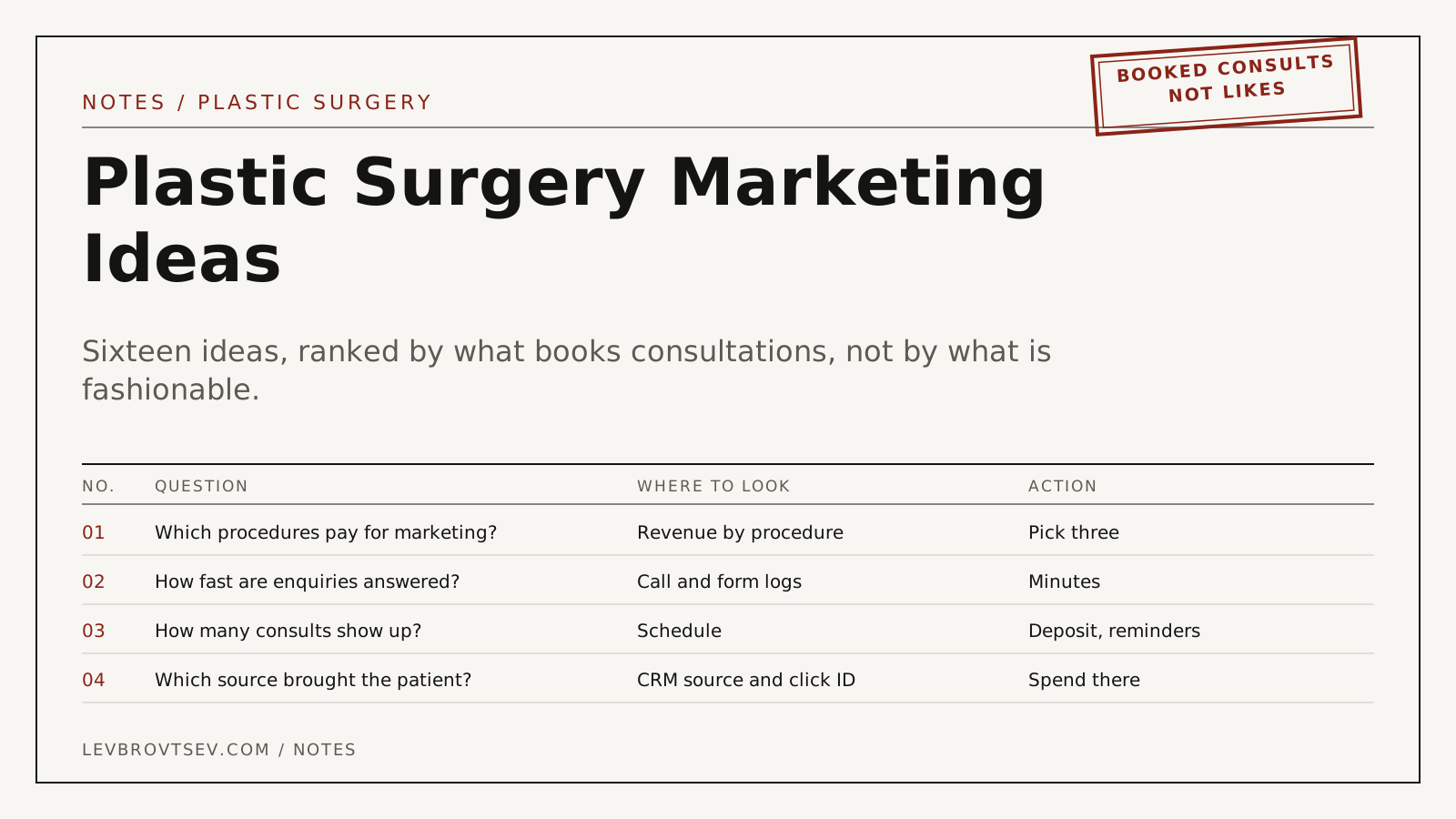
Every list of marketing ideas for plastic surgeons looks the same: post on Instagram, start a TikTok, run a giveaway, host an event. Some of that works for some practices. None of it tells you what to do first, what it costs, or how you would know it worked.
This list is ordered differently. Each idea has a cost, a time to result and one number to measure it by. The order reflects what I see move booked consultations in aesthetic accounts, starting with what is nearly free.
Which plastic surgery marketing ideas actually work?
The plastic surgery marketing ideas that work are the ones you can connect to attended consultations and surgical cases. In practice that means fast enquiry handling, deposits and reminders, procedure pages that answer price and recovery questions, a strong review profile, and search advertising limited to high-value procedures and measured on consultations that happened.
The ranking, and how to read it
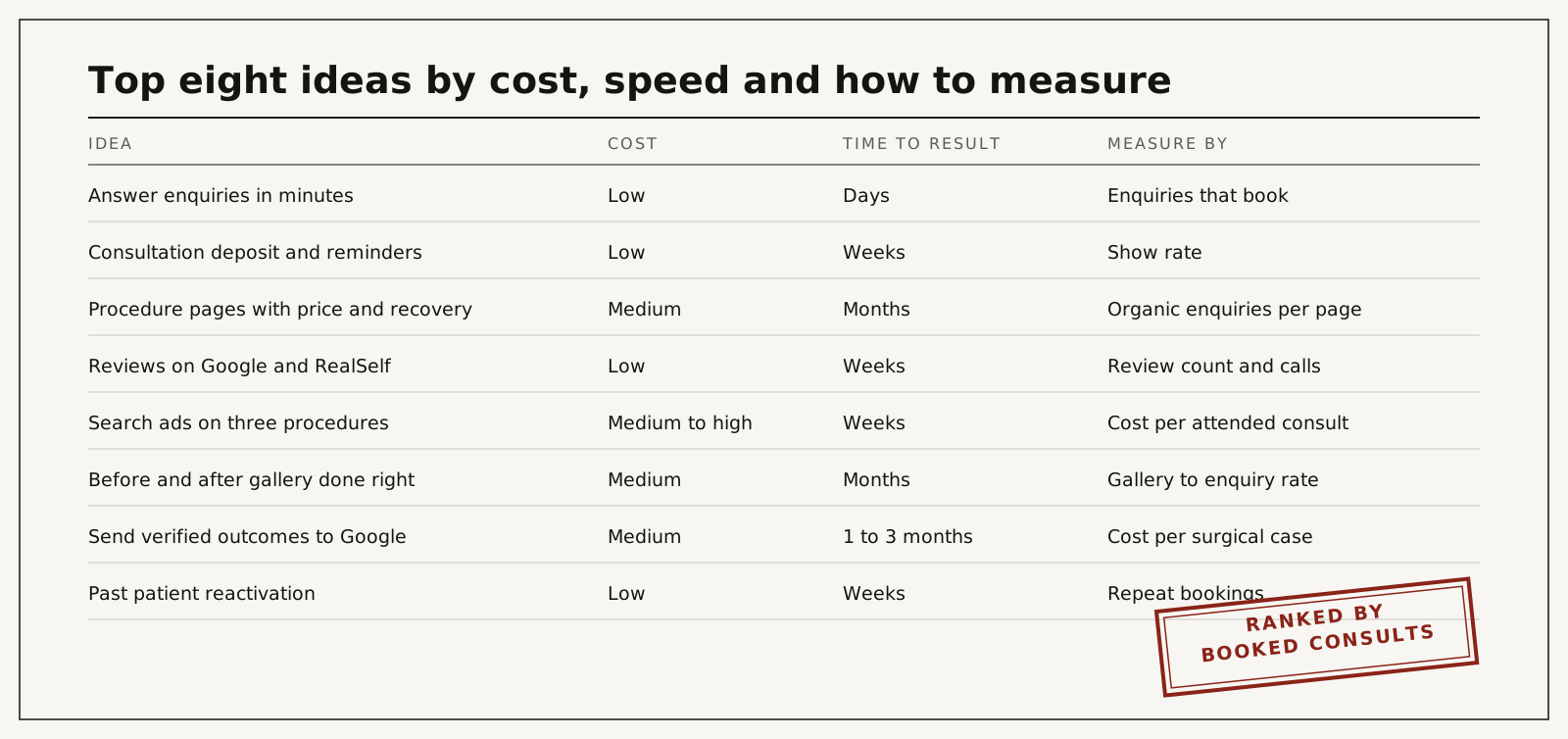
| # | Idea | Cost | Time to result | Measure by |
|---|---|---|---|---|
| 1 | Answer every enquiry in minutes | Low | Days | Enquiries that become bookings |
| 2 | Consultation deposit and reminders | Low | Weeks | Show rate |
| 3 | A consult script with a next step | Low | Weeks | Consults that become cases |
| 4 | Track source and click ID on every enquiry | Low | Weeks | Share of cases with a known source |
| 5 | Procedure pages with price range and recovery | Medium | Months | Organic enquiries per page |
| 6 | Reviews on Google and RealSelf | Low | Weeks | New reviews per month, calls from the profile |
| 7 | Complete Google Business Profile | Low | Weeks | Calls and direction requests |
| 8 | Before-and-after gallery done properly | Medium | Months | Gallery visits that enquire |
| 9 | Surgeon-led answers for AI assistants | Medium | Months | Named citations, enquiries that mention an assistant |
| 10 | Search ads on three procedures | Medium to high | Weeks | Cost per attended consultation |
| 11 | Microsoft Ads for the same procedures | Medium | Weeks | Cost per attended consultation |
| 12 | Send verified outcomes back to Google | Medium | 1 to 3 months | Cost per surgical case |
| 13 | Financing page and messaging | Low | Weeks | Consults that mention financing |
| 14 | Past-patient reactivation | Low | Weeks | Repeat bookings |
| 15 | Surgeon video answers | Medium | Months | Views on procedure pages, enquiries |
| 16 | Referral relationships | Low | Months | Referred consultations |
Ideas 1 to 4: fix what you already paid for
These four apply to any practice. The general version, with the six numbers to track, is in how to get more patients and know which ones came from marketing.
1. Answer every enquiry in minutes
Someone researching a rhinoplasty has three tabs open. The practice that replies first has the conversation. Decide who owns new enquiries during opening hours and what happens at 7pm and on Sunday. The evidence on response time is old and consistent, from Harvard Business Review's study of online sales leads onward. I cover it for expensive services in speed to lead for high-ticket businesses.
2. Consultation deposit and reminders
A small deposit, credited toward the procedure, plus text and email reminders. People who pay something show up. Your surgeon's time is the scarcest thing in the building.
3. A consult script with a next step
Every consultation should end with a date: surgery, a second visit, or a call. "Think about it and let us know" is where surgical cases go to die. I take this apart in plastic surgery consultations that do not book.
4. Track source and click ID on every enquiry
One field for source and one for the ad click ID on every form and call. Without them you are choosing between the ideas below by instinct. The ID is explained in what a GCLID is.
Ideas 5 to 9: be found by people already looking
5. Procedure pages with price range and recovery
One page per procedure. A direct answer in the first paragraph, who is a candidate, how pricing works with a realistic range, recovery week by week, risks, who operates. Practices avoid price because they fear scaring people off. What actually happens is that people leave to find it elsewhere.
6. Reviews on Google and RealSelf
Ask every happy patient, make it one tap, reply to each one. Never offer incentives and never write your own. The FTC's rule on consumer reviews and testimonials applies to medical practices like everyone else.
7. Complete Google Business Profile
Procedures as services, surgeon profiles, booking link, photos of the facility, accurate hours. This is what shows in map results when someone searches for a surgeon near them. The local side is described under local SEO for practices.
8. Before-and-after gallery done properly
On your own site, with consent on file, consistent lighting and angles, filterable by procedure, and each case linking to the procedure page. The gallery is for your website. It does not belong in ad creatives, as the policy section explains.
9. Surgeon-led answers for AI assistants
Patients now ask ChatGPT and Gemini who does a procedure well in their city. Assistants name sources that answer directly and can be attributed to a real, credentialed person. Put the surgeon's name, credentials and a short direct answer at the top of each procedure page. The method is in how clinics get cited by ChatGPT and Perplexity.
Ideas 10 to 13: paid traffic, done narrowly
10. Search ads on three procedures
Choose the three procedures where one case pays for a month of advertising. Build campaigns only for those, send each to its own page, and exclude everything else. Broad "plastic surgeon near me" campaigns spend quickly on people who want something you may not even offer.
11. Microsoft Ads for the same procedures
Smaller volume, older and often wealthier searchers, lower competition. Import the same campaigns once Google is working. I put the two platforms side by side in Microsoft Ads vs Google Ads for high-ticket services.
12. Send verified outcomes back to Google
Tell Google which clicks became attended consultations, using the click ID and a neutral stage name. Bidding then looks for more people like your patients and fewer like your form fillers. This is the step that moves cost per case the most. The method is in my offline conversion tracking guide, and the privacy design in click-ID-only conversion feeds.
13. Financing page and messaging
A clear page on payment options, mentioned in ads where policy allows and raised in every consultation. For many patients the question is monthly cost, and they will not ask.
Ideas 14 to 16: the long game
14. Past-patient reactivation
Your past patients already trust you. A quarterly message about a relevant service, sent only with the consent and the tools your privacy rules allow, is the cheapest campaign you will ever run. The tooling question is covered in HIPAA-compliant marketing automation.
15. Surgeon video answers
Sixty to ninety seconds per question, filmed simply, placed on the matching procedure page and on YouTube. One question per video: recovery time, scarring, who is not a candidate. This builds trust before the consultation and gives assistants and search engines something attributable.
16. Referral relationships
Dermatologists, med spas without a surgeon, bariatric programs, dentists doing full-mouth work. A short list, a named contact at each, and a simple way for them to refer.
What not to do: policy traps
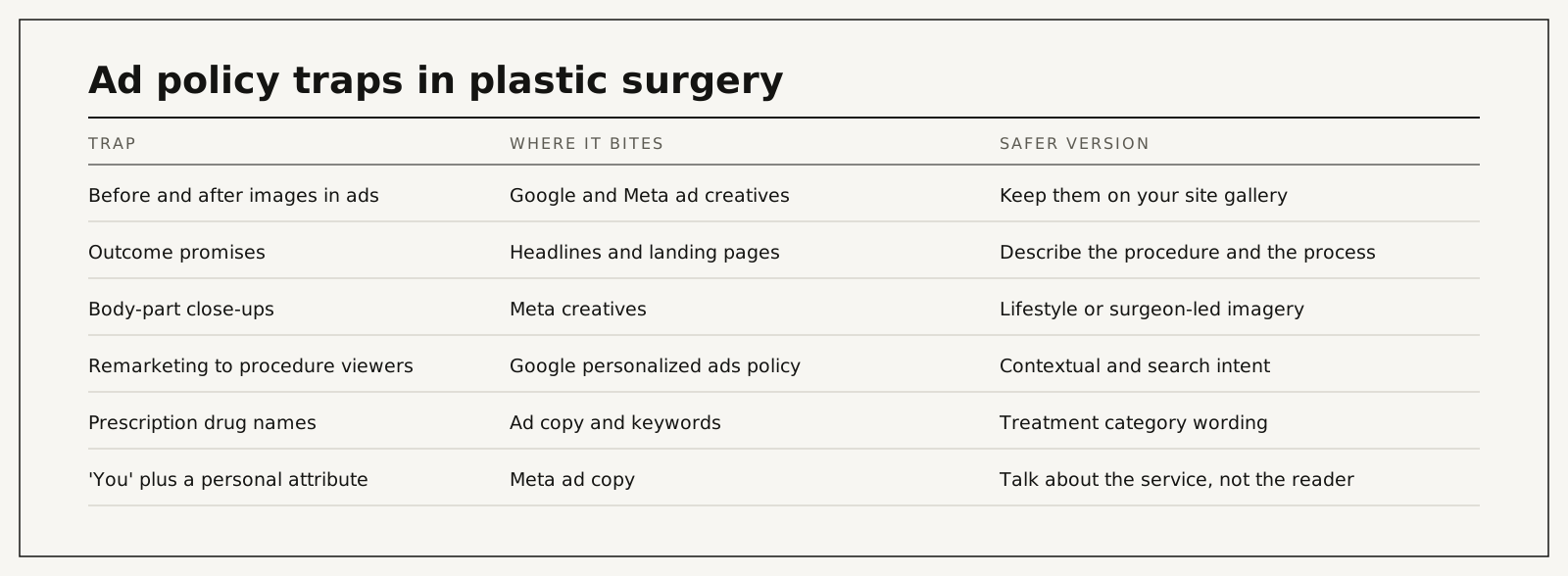
| Cause | What actually happens | Hidden cost | What you see | Risk level |
|---|---|---|---|---|
| Before-and-after images in ad creatives | Disapproved on Google and Meta | Days lost per rejection, strikes on the account | "Disapproved: healthcare" or "personal attributes" | High |
| Outcome promises in headlines or landing pages | Flagged as misleading health claims | Landing page rewrites under pressure | Policy emails naming the destination | High |
| Remarketing lists built from procedure pages | Breaks Google's personalized advertising policy for sensitive health categories | Audiences disabled, sometimes account review | Remarketing lists marked ineligible | High |
| "You" plus a body issue in Meta copy | Treated as asserting a personal attribute | Ad sets rejected repeatedly | "Personal attributes" rejection | Medium |
| Prescription product names in ad copy | Restricted under Google's healthcare and medicines policy | Disapprovals across whole ad groups | Disapproved for unapproved pharmaceuticals | Medium |
| Giveaways of surgical procedures | Ethical and sometimes regulatory problems | Reputation, board complaints | Comments you do not want under your name | Medium |
Practices that prescribe at a distance, for example weight-loss medication by online consultation, face a different gate, covered in LegitScript certification and who needs it. The fixes for ordinary disapprovals are written up in getting cosmetic surgery ads approved. If ads are already disapproved, that is my ad policy and approvals work.
A 90-day starter plan
Days 1 to 30: ideas 1 to 4. Enquiry ownership, deposit, script, source tracking. Find last month's numbers for each stage.
Days 31 to 60: ideas 5 to 7 for your three chosen procedures. Rewrite those pages, fix the profile, start asking for reviews every week.
Days 61 to 90: idea 10, then 12. Narrow search campaigns to the three procedures, and connect attended consultations back to Google.
Everything else waits until those are working.
What it costs, by route
Market figures were checked in September 2026 for the US and Canada. They are ranges, not quotes.
| Route | Typical cost | Time to more booked consultations | What it depends on |
|---|---|---|---|
| Ideas 1 to 4 done in-house | Staff time | Days to weeks | One person owning enquiries |
| Pages, reviews and profile | Staff time, or a writer's fee per page | Weeks to months | How competitive your city is |
| Ads through an agency | 10% to 20% of ad spend, or $2,500 to $7,500 a month for mid-sized accounts, plus one-time setup of $500 to $5,000 | Weeks | Whether they report consultations or leads |
| Ads and tracking through me | My standard retainer is $5,000 a month, adjusted to budget and workload. Under about $10,000 a month in ad spend, start with the $500 audit and a fixed project | Weeks for traffic, one to three months for cost per case to settle | Procedure values, competition, booking data |
| Carry on as now | Nothing new | Never | The gaps in the surgical schedule stay |
In-house, agency or consultant
| Option | Cost | Time to result | Risk | When it makes sense |
|---|---|---|---|---|
| In-house coordinator | Salary | Fast on ideas 1 to 8 | Little paid media or tracking depth | You have a capable coordinator and a surgeon willing to be on camera |
| Aesthetic marketing agency | Monthly fee | Medium | Templates shared with competitors, reports on leads | You need website, social, photo and ads from one supplier |
| Consultant | Monthly fee or fixed project | Fast on ads and measurement | Depends on one person | You want paid media and tracking run by the person you talk to, judged on cases |
| Everything at once | Highest | Slow | Nothing gets finished | Never |
An agency is the better choice when you need production: a new site, a photo library, daily social. The narrower question, which clicks become surgical cases and how to get more of them, is where one experienced person is usually faster. My approach for this field is on the plastic surgery marketing page. It comes from the same method behind the one result I quote: I inherited an underperforming account and rebuilt it; cost per acquisition came down by about 78% while spend grew.
The audit covers your ad account, the tracking and the path from enquiry to booked patient, and ends with a 90-day plan. It is credited toward the first month if you continue with me.
You work with me directly. There are no account managers and no juniors.
If you want to know which of these sixteen would pay back first in your practice, that is what my audit answers: the ad account, the tracking, and the path from enquiry to consultation. It is $500 per ad account, comes with a 90-day plan, and is credited toward the first month if you continue with me. You work with me directly. Book a call or write first.
Pick three procedures and start there
Sixteen ideas is fifteen too many for next week. Choose the three procedures that pay for marketing, find out what happened to last month's enquiries for them, and work down the list from the top. If you would like the numbers found for you, start with the audit.
Frequently asked questions
What is the best marketing for plastic surgeons?
The best marketing is whatever produces attended consultations at a cost you can measure. For most practices that starts with enquiry handling and procedure pages, then search ads on a few high-value procedures. Social content supports trust. It rarely drives cases on its own.
How much should a plastic surgery practice spend on marketing?
Work backwards from the value of your main procedures and the number of cases you want. Then check that enquiries are answered fast and consultations show up before spending more on traffic.
Does Instagram work for plastic surgeons?
It builds familiarity and gives prospective patients a sense of the surgeon. Measure it on enquiries that mention it, not on followers. Many practices over-invest here because it is visible, while missed calls are not.
Can I use before-and-after photos in ads?
On your own website, with consent, yes. In Google and Meta ad creatives they are a common cause of disapproval. Keep them in the gallery and send ad traffic to a compliant procedure page.
How long until marketing shows results?
Enquiry handling: days. Reviews and profile: weeks. New pages: months. Ads: traffic in days, a reliable cost per consultation in one to three months.
What does it cost to hire help?
Agencies usually charge 10% to 20% of ad spend or $2,500 to $7,500 a month for mid-sized accounts. My retainer is $5,000 a month, adjusted to budget and workload, and the audit is $500 per ad account.
Who does the work if I hire you?
I do. Strategy, campaign builds, tracking and reporting. Nothing is handed to a junior or subcontracted.
How do I know which ideas are working?
Store the source and the ad click ID on every enquiry and follow each record to the consultation and the case. Then every idea on this list has a number next to it.