Notes
LegitScript Certification: What It Is, Who Needs It, and What It Costs
LegitScript is a private company that certifies healthcare businesses in high-risk categories. Google, Microsoft and Meta rely on its certification before they allow ads from online pharmacies, telehealth services that prescribe, and US addiction treatment providers. Most clinics, including dental, plastic surgery, dermatology and fertility, do not need it.
Key takeaways
- LegitScript certifies the business, its licenses and its website. It does not review your ads.
- Google requires it only in named categories: online pharmacy, prescribing telehealth, and addiction treatment in the US.
- There are two fees: a nonrefundable application fee and an annual certification fee. Addiction treatment is priced per facility, healthcare merchants per website.
- Certification does not switch your ads on. You then apply to Google separately so the certificate is attached to your ad account.
- If your disapproval email names a different policy, certification will not fix it and the fee is wasted.
Contents
- What is LegitScript certification?
- Who Google actually requires it from
- Who does not need it, which is most clinics
- What LegitScript certification costs in 2026
- How the process works, and the second gate
- What to fix before you apply
- Apply yourself, get help, or skip paid search
- What still gets you disapproved after certification
- Read the policy named in the email first
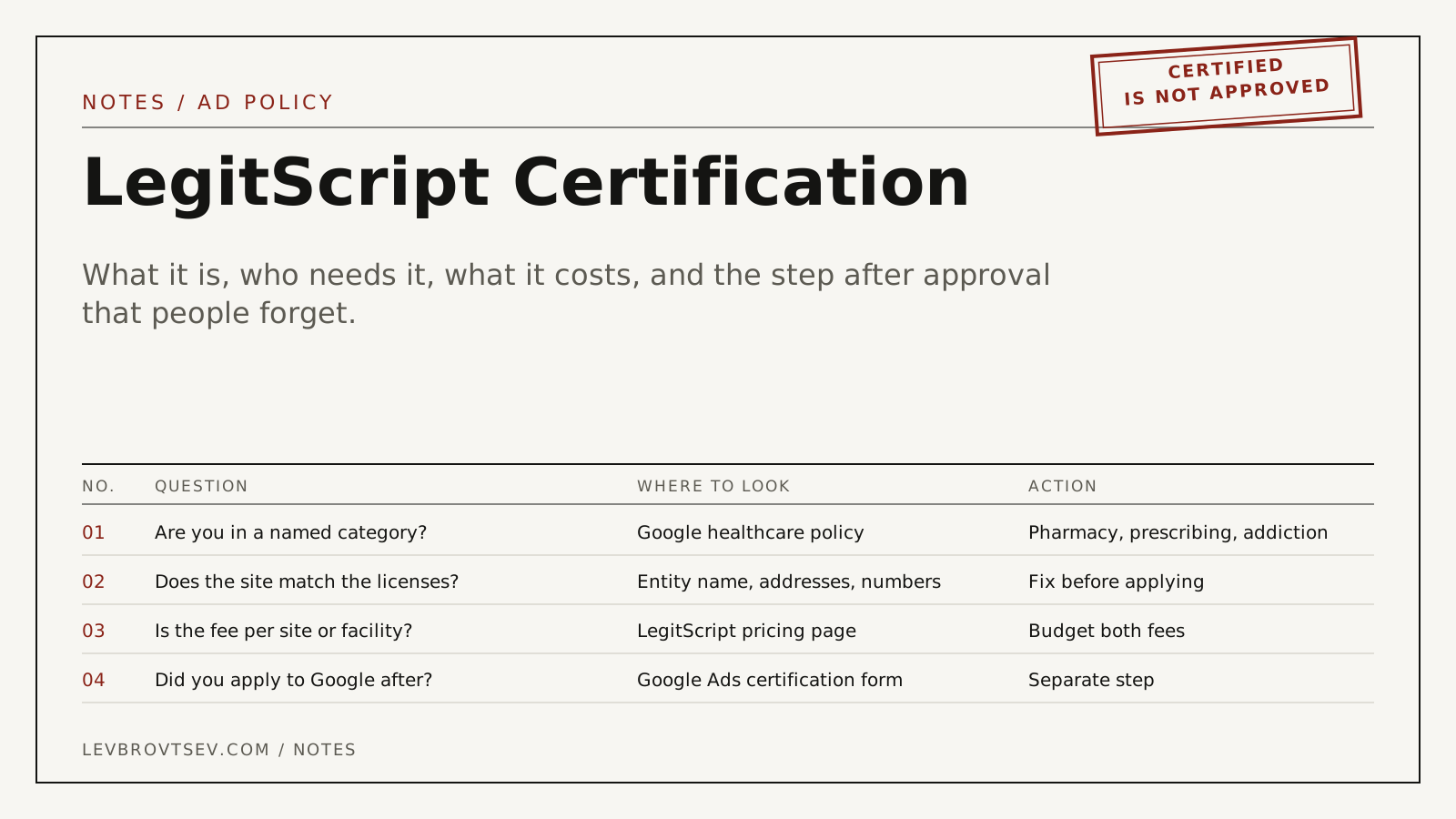
"Do we need LegitScript?" comes up in almost every healthcare onboarding call I take. Usually a disapproval email mentioned certification and the owner assumed it applies to everyone in medicine. It does not. Applying when you do not need it wastes months and fees. Not applying when you do keeps your ads off indefinitely. Here is the map.
Disclosure: I do not take addiction treatment or behavioral health clients at the moment because of an exclusivity agreement. For that category this article is a map and not a pitch.
What is LegitScript certification?
LegitScript certification is a review of a healthcare business by an independent company, LegitScript, confirming that it is licensed, operates legally and describes itself accurately online. Advertising platforms and payment processors use the result as proof that someone qualified has checked. It lasts one year and is renewed annually, with monitoring in between.
Two programs matter for advertisers. Healthcare Merchant Certification covers pharmacies and telemedicine. Addiction Treatment Certification covers drug and alcohol treatment providers, and LegitScript states on that page that it is recognized by Google, Microsoft and Meta.
The important word is business. The reviewer reads your licenses, your ownership records, your policies and your website. Your ad copy is not part of it. That is Google's job, later.
Who Google actually requires it from
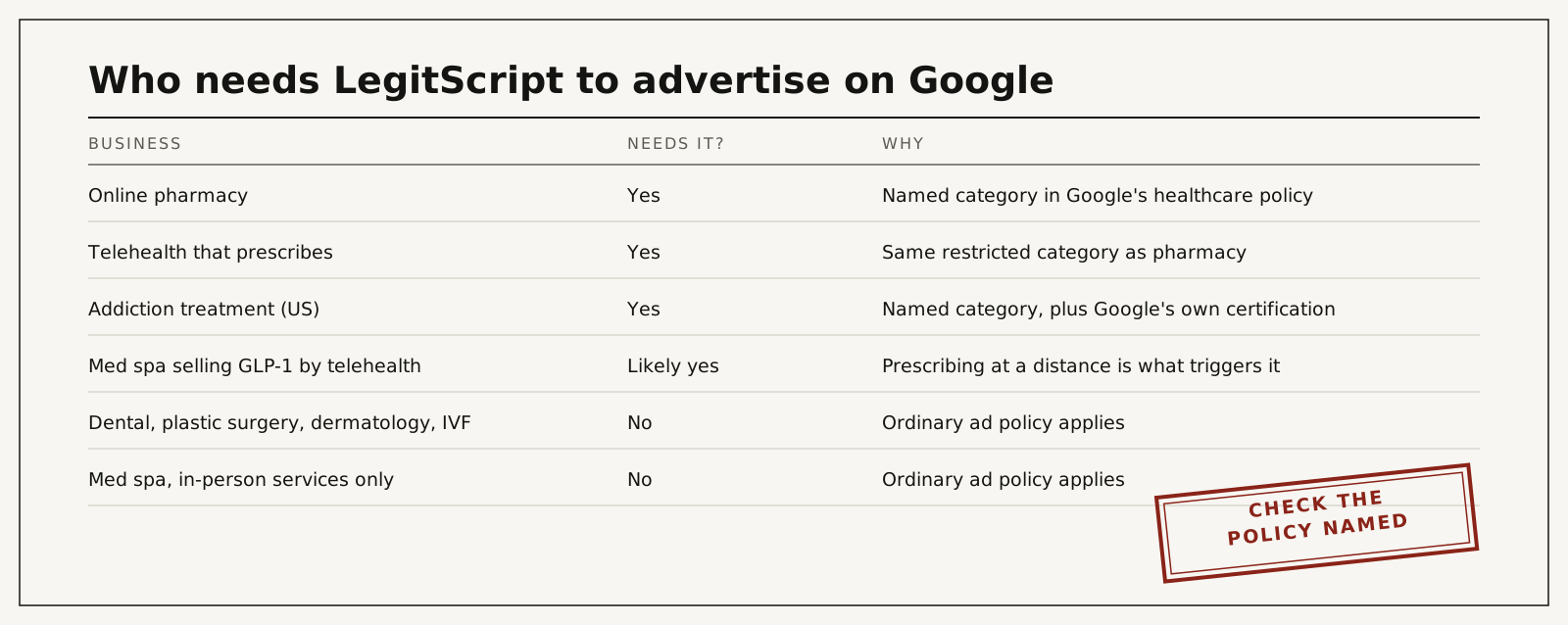
Google's healthcare and medicines policy names the categories where third-party certification is a precondition: online pharmacies, telemedicine services that prescribe, and addiction services in the United States. In these categories the check happens at the account and business level. No amount of ad copy editing will get you approved without the certificate.
One group is caught by surprise more and more: aesthetic and weight-loss practices that started prescribing at a distance. A med spa that treats people in person is an ordinary advertiser. LegitScript's own certification FAQ draws the line clearly: taking payments for consultations, appointments or deposits does not make a med spa eligible, while processing online payments for prescription medications does. So the same med spa selling prescription weight-loss medication through online consultations has become a prescribing telehealth service. If that is you, check the wording against your model before your next campaign, not after the suspension.
Who does not need it, which is most clinics
Dental practices, plastic surgeons, in-person med spas, dermatology, IVF and fertility clinics, orthopedics, LASIK, chiropractic and physical therapy do not need LegitScript to advertise.
When their ads are disapproved, the causes are ordinary: outcome promises in copy, before-and-after imagery on the landing page, prescription drug brand names on the site, or the limits in Google's personalized advertising policy for sensitive health categories. Those are fixed by changing the site and the ads. A certification fee would not have helped. I cover the usual suspects in getting cosmetic surgery ads approved and the site side in what a healthcare website needs before Google Ads will run.
What LegitScript certification costs in 2026
Prices are set by LegitScript and change. The figures below were taken from LegitScript's own healthcare certification and addiction treatment certification pages on 19 September 2026. Confirm them there before you budget.
| Program | Application fee (nonrefundable) | Annual certification fee | Priced per | Source |
|---|---|---|---|---|
| Addiction treatment, facility | Tiered by number of facilities. See LegitScript's pricing tiers | $2,550 to $3,095 | Unique facility | LegitScript addiction treatment page |
| Addiction treatment, individual practitioner (one to three providers, one location, one website) | $535 | Lower tier. See LegitScript's page | Practice | LegitScript addiction treatment page |
| Healthcare merchant (pharmacy, telemedicine), standard | $975 | $2,150 | Website (root domain) | LegitScript healthcare certification page |
| Healthcare merchant, probationary (heightened monitoring) | $975 | $3,995 | Website (root domain) | LegitScript healthcare certification page |
| Optional expedited review, healthcare merchant | Additional $2,500 per application | n/a | Application | LegitScript healthcare certification page |
Three things owners miss when they budget.
The application fee is gone whether or not you are approved. So the cheapest application is the one that does not stall.
The annual fee is due only once you are approved, and it recurs. A group with six facilities is budgeting six annual fees.
The fees are the small part. The larger cost is internal: gathering licenses for every location and clinician, fixing mismatched entity names, rewriting pages that promise outcomes, and, for many, a legal review of financial and referral arrangements. If left alone, the cost is simpler to state. In a category where certification is required, there is no paid search at all, so every competitor who is certified takes those searches.
How the process works, and the second gate
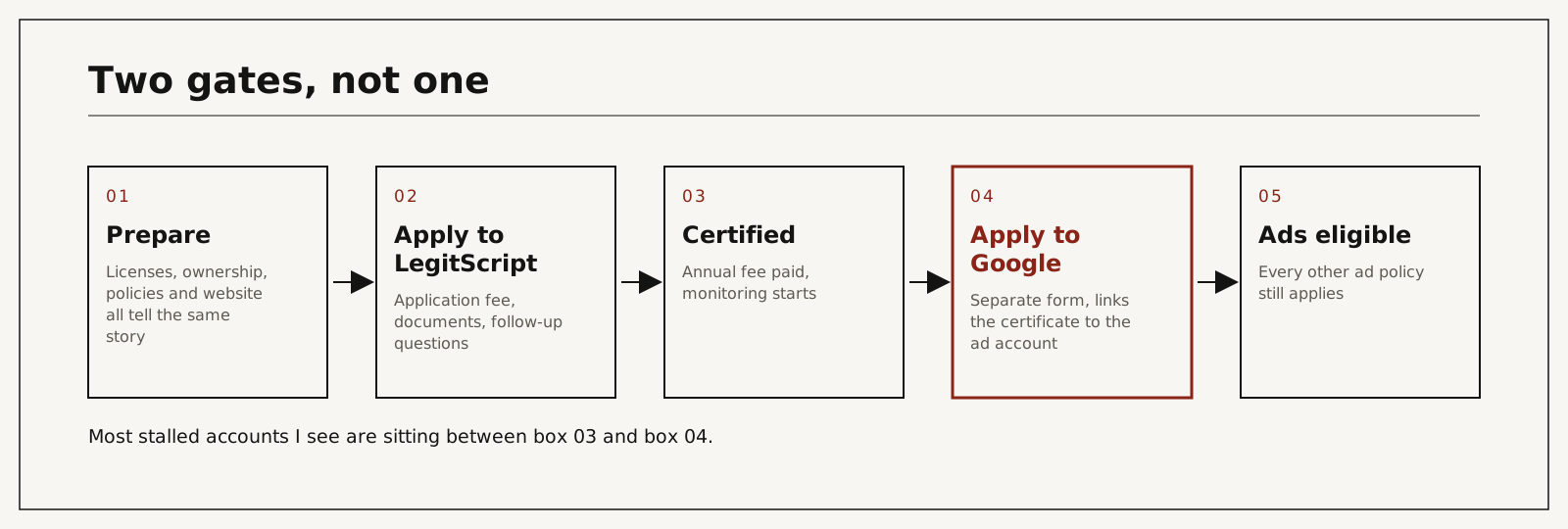
- You apply on LegitScript's site and pay the application fee.
- You submit licensure, ownership and operational documentation, and answer follow-up questions.
- LegitScript reviews the business and the website. It does not publish a guaranteed timeline. In my experience it runs from weeks to a couple of months, and completeness of documentation decides which.
- On approval you pay the annual fee and monitoring begins.
- You then apply to Google for its own certification so the LegitScript approval is linked to your Google Ads account. Microsoft and Meta have their own forms too.
Step five is the one people forget. They receive the LegitScript email, celebrate, and wait. Nothing changes, because Google has not been told. Addiction services advertisers in particular must complete Google's certification as well as LegitScript's.
What to fix before you apply
The review reads your website, so the website is where applications stall.
- Make license numbers findable and current, for the facility and for clinicians where your state expects it.
- Use one legal entity name everywhere: site footer, licenses, Google Ads billing, payment processor.
- Remove claims your documentation cannot support. Success rates, guarantees and "best" language are the usual ones.
- State pricing, insurance and refund policies plainly.
- Make the physical address match the licensed address. Suite numbers count.
- Check every domain you own. Forgotten microsites with old claims are reviewed too.
Applications stall on mismatches more than on substance. The reviewer cannot approve what they cannot verify.
| Cause | What actually happens | Hidden cost | What you see | Risk level |
|---|---|---|---|---|
| Entity name differs between license and website | Reviewer cannot tie the license to the business | Weeks of follow-up questions | "Additional information requested" emails | High |
| Outcome claims on service pages | Flagged as unsupported | Rewrite under time pressure | Requests to remove specific language | Medium |
| Old microsite still live | Reviewed as part of the business | One stale page holds up the whole application | Questions about a domain you forgot | Medium |
| Certified, but Google never notified | Ads stay ineligible | Months of lost search demand | Disapprovals continue unchanged | High |
| Applied without needing to | Fee paid for nothing | The real policy problem is untouched | Same disapprovals after approval | High |
| Renewal missed | Certification lapses, ads stop | Sudden loss of paid traffic | Account-level disapprovals overnight | High |
Apply yourself, get help, or skip paid search
| Option | Cost | Time to result | Risk | When it makes sense |
|---|---|---|---|---|
| Apply yourself | LegitScript fees plus staff time | Depends on how clean your records are | Stalls on avoidable mismatches | Single location, tidy licensing, someone detail-minded on staff |
| Healthcare attorney plus internal team | Fees plus legal hours | Slower start, fewer surprises | Low | Multi-location groups, complex ownership, referral arrangements |
| Consultant prepares the site and documentation map | Fees plus a fixed project | Usually the fastest route to a complete application | Depends on the consultant knowing both LegitScript and ad policy | When the website needs real changes anyway |
| Do not certify, rely on SEO, referrals and non-restricted channels | No fees | Immediate | You give up paid search in your category | Very small practices, or markets where demand is not search-led |
An honest note on agencies: if an agency already handles your compliance paperwork well, this is not a reason to leave it. The preparation is mostly administrative. What matters is that whoever does it also understands what Google will check afterwards.
What still gets you disapproved after certification
The certificate opens the category. It does not exempt your ads from every other policy. Certified accounts still get disapprovals for outcome claims, restricted drug terms in keywords and copy, and landing page problems. Treat certification as the entry ticket and ordinary policy hygiene as the ongoing work. I describe that ongoing work in advertising inside a regulated healthcare category.
I run Google Ads for a luxury US healthcare clinic in one of the most restricted ad categories that exists, so policy work is part of my week. It is also where the one result I quote comes from: I inherited an underperforming account and rebuilt it; cost per acquisition came down by about 78% while spend grew. The case write-up is here.
The audit covers your ad account, the tracking and the path from enquiry to booked patient, and ends with a 90-day plan. It is credited toward the first month if you continue with me.
You work with me directly. There are no account managers and no juniors.
Not sure whether certification is your actual problem? Send me the disapproval notice before you spend anything. I will tell you whether it is a certification case, a remediation case, or something that cannot be fixed, and I will tell you straight. That diagnosis is part of my ad policy and approvals work. The audit is $500 per ad account, comes with a 90-day plan, and is credited toward the first month if you continue with me. You work with me directly. Book a call or write first.
Read the policy named in the email first
One line in a disapproval email decides whether you are facing a few days of site changes or a few months of certification. Read it before you pay an application fee that cannot be refunded. If it names pharmacy, prescribing or addiction services, start gathering licenses today and remember the second gate at Google. If it names anything else, certification is not your problem. If you want it read by someone who does this weekly, send it over.
Frequently asked questions
Google disapproved our ads and mentioned certification. Do we need LegitScript?
Read the exact policy named in the disapproval. Most clinic disapprovals cite healthcare and medicines or personalized advertising, which are remediation issues. Certification applies only if you are in a named category such as pharmacy, prescribing telehealth or US addiction treatment.
How much does LegitScript certification cost?
An application fee plus an annual fee. Healthcare merchants (pharmacy, telemedicine) pay $975 to apply and $2,150 a year per website, or $3,995 a year on probationary status. Addiction treatment is priced per facility: $2,550 to $3,095 a year, with a lower tier for individual practitioners whose application fee is $535. Figures from LegitScript's site, September 2026.
How long does LegitScript certification take?
LegitScript does not promise a timeline. In my experience it takes from a few weeks to a couple of months, and the main variable is how complete and consistent your documentation is on the first submission.
Can I prepare the application myself?
Yes. A single location with clean licensing can do it with one careful person. Groups with several facilities, several domains or complex ownership usually need legal input.
What happens if we advertise without it?
In a category where Google requires certification, ads are disapproved and repeated attempts can lead to account suspension. There is no workaround that survives review.
Does LegitScript certification help with Meta and Microsoft?
LegitScript states that its addiction treatment certification is recognized by Google, Microsoft and Meta. Each platform has its own application step after you are certified.
Who does the work if I hire you?
I do. Reading the disapproval, mapping what the site has to change, and the ad policy work afterwards. Nothing is handed to a junior or subcontracted. I do not submit legal documents on your behalf.
Can you guarantee certification or approval?
No one honestly can. LegitScript and Google make those decisions. What I can stand behind is an accurate diagnosis of whether certification applies to you, and materials prepared so the review has nothing to stall on.