Notes
Healthcare Digital Marketing: Every Channel, What It Costs, What Is Allowed
Healthcare digital marketing is the set of channels a clinic can use to reach patients online: paid search, paid social, SEO, local SEO, AI search, email and reactivation. Which ones work depends on your procedure values and search demand. Which ones are allowed depends on ad policy and privacy law, and that part is not negotiable.
Key takeaways
- Paid search produces patients in days, SEO in months, AI search visibility later still. Budget accordingly.
- Healthcare is a restricted advertising category. Several ordinary tactics, such as remarketing to a procedure page, are not permitted.
- The measurement layer matters more than the channel mix. Without it, every channel reports form fills and none reports patients.
- Cost per patient differs by procedure, not by channel. Measure it that way or you will defund the channel that works.
- Most clinics have more to gain from answering enquiries faster than from adding a channel.
Contents
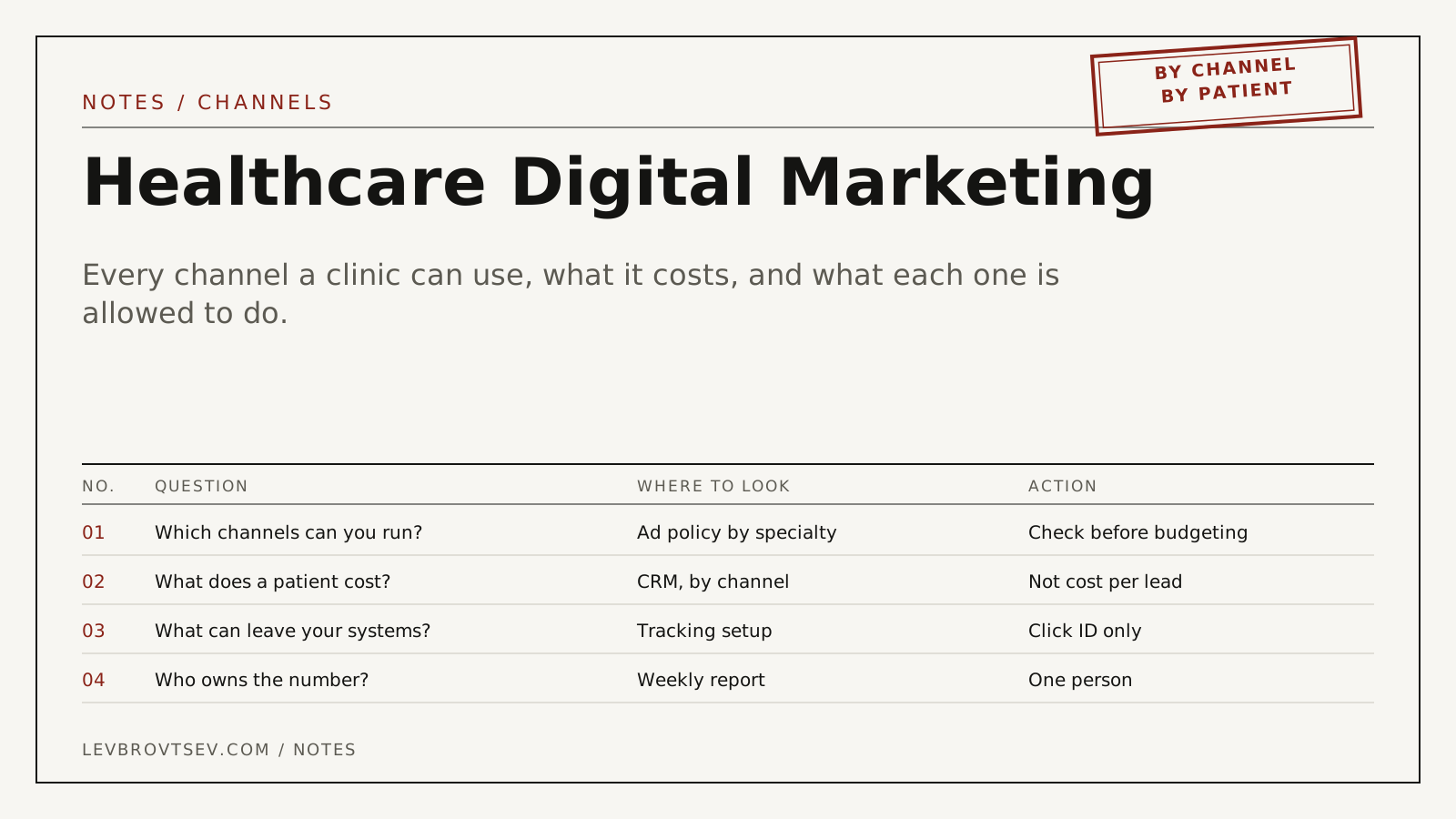
You have a website, a Google Business Profile, maybe an agency running ads, and somebody keeps suggesting TikTok. The reports say things are improving. The schedule is the same as last quarter.
The problem is usually not the channel list. It is that nothing in the list is measured on patients, and two or three of the channels were chosen because they are visible rather than because they fit the way people buy the procedures you sell.
What is healthcare digital marketing?
Healthcare digital marketing is how a clinic attracts and converts patients through online channels: search advertising, social advertising, organic search, local listings, AI assistants, email and its own website. In regulated fields it also includes the compliance and measurement work that makes those channels usable at all, because health advertising carries platform restrictions and patient data carries legal ones.
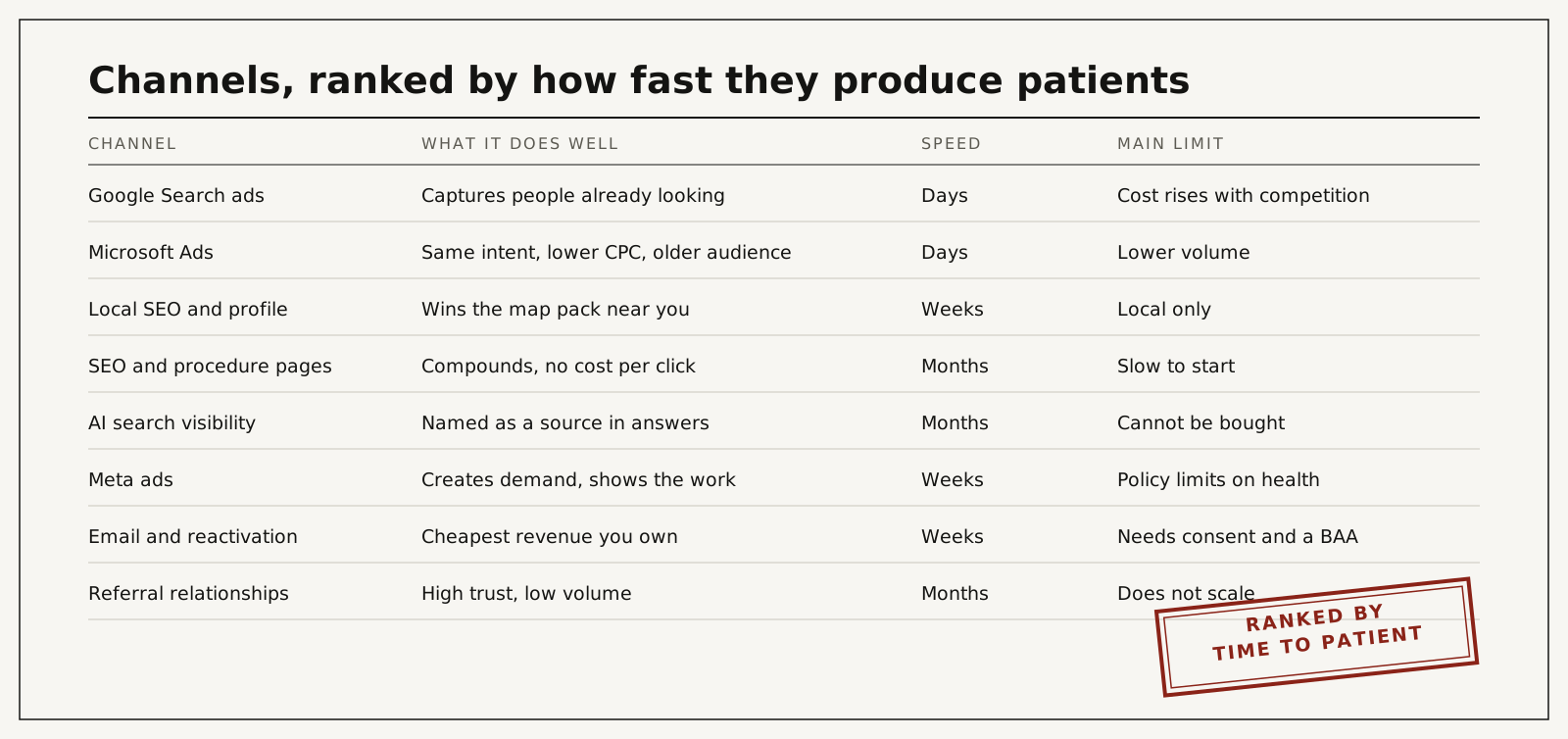
The channels, ranked by time to a patient
Google Search ads
The fastest way to reach someone who has already decided they want a procedure. Days to first enquiries. The limit is competition: in dense markets a single click on a high-value term costs real money, which is why campaigns should be narrow and aimed at the procedures that justify it. My approach is on the Google Ads for healthcare page, and for physician-owned practices on Google Ads for doctors.
Microsoft Ads
The same intent at lower cost per click, with an audience that skews older and often wealthier. Volume is smaller. Import the campaigns once Google works. I put the two side by side in Microsoft Ads vs Google Ads for high-ticket services.
Local SEO and the Business Profile
For anything people search with "near me", the map pack decides who gets the call. Complete services, hours, photos, booking link, and a steady flow of reviews. Weeks to move, and it costs nothing but attention. Covered under local SEO for practices.
SEO and procedure pages
Slow and compounding. A procedure page that answers price, candidacy and recovery earns enquiries for years without a cost per click. Months before it ranks. This is also the layer that AI assistants read.
AI search visibility
Patients now ask assistants who does a procedure well in their city. You cannot buy this. You earn it by answering directly, marking up who stands behind the page, and being described consistently across the web. The method is in how clinics get cited by ChatGPT and Perplexity.
Meta ads
Useful for creating demand rather than capturing it: showing the facility, the provider, the experience. Health categories face tight creative rules, described below. Judge it on enquiries that mention it, not on engagement.
Email and patient reactivation
The cheapest revenue in the building, and the most often ignored. Past patients already trust you. It needs consent and the right tooling, which is a compliance question before a marketing one: see HIPAA-compliant marketing automation.
Referral relationships
Not digital, but it belongs in the plan. A short list of named contacts at complementary practices produces high-trust patients at almost no cost, and it does not scale. Treat it as a floor, not a channel.
What each channel costs
Market figures were checked in September 2026 for the US and Canada. They are ranges, not quotes.
| Channel | Typical outside cost | Time to first patients | What drives the cost |
|---|---|---|---|
| Google Search ads | 10% to 20% of ad spend for management, or $2,500 to $7,500 a month for mid-sized accounts, plus one-time setup of $500 to $5,000 | Days to weeks | Local competition, procedure value |
| Microsoft Ads | Usually folded into the same retainer | Days to weeks | Lower volume, lower CPC |
| Local SEO | Staff time, or a small monthly fee | Weeks | Review flow, profile completeness |
| SEO and procedure pages | Your time, or a per-page writing fee | 2 to 6 months | Competitiveness of the procedure |
| AI search visibility | Published 2026 guides put audits at $500 to $2,000 light, $2,500 to $10,000 deep; programs $1,500 to $10,000 a month | Weeks to months | State of your schema and profiles |
| Meta ads | Same management models as search | Weeks | Creative production, policy rework |
| Email and reactivation | Platform fee plus the time to write | Weeks | Whether your tooling can sign a BAA |
| My own model | Audit at $500 per ad account with a 90-day plan, credited toward the first month. Retainers from $5,000 a month, adjusted to budget and workload | Weeks for traffic, 1 to 3 months for cost per patient | Procedure values, competition, booking data |
The layer underneath all of them
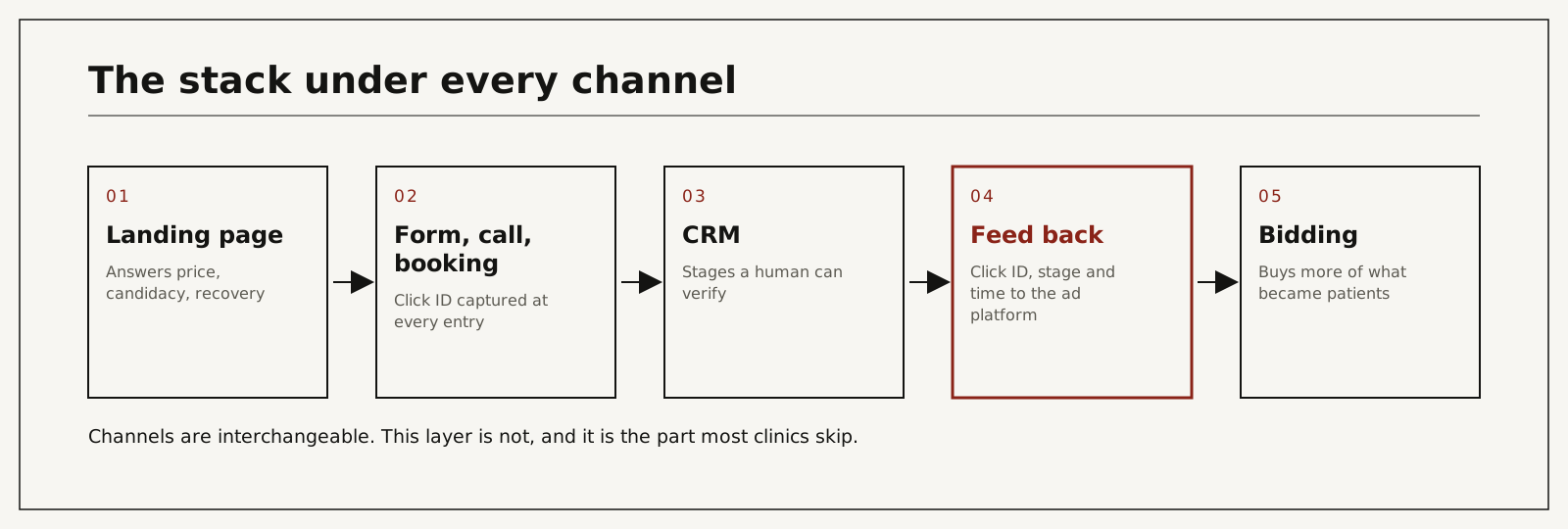
Every channel above ends in the same place: someone fills in a form, calls, or books. What happens next decides whether any of it can be judged.
If the ad click identifier is stored with the enquiry and the enquiry is followed to a real stage in your system of record, you can say what a patient costs by channel and by procedure. If it is not, your reports count form fills, and bidding algorithms go looking for more of those. I explain the identifier in what a GCLID is and the loop in the offline conversion tracking guide.
For clinics there is a second requirement: the feed back to the ad platform should carry a click ID, a neutral stage name and a time, and nothing else. That design is in click-ID-only conversion feeds, with the website side in is Google Analytics HIPAA compliant and the form side in HIPAA-compliant forms.
What healthcare is not allowed to do
| Cause | What actually happens | Hidden cost | What you see | Risk level |
|---|---|---|---|---|
| Remarketing lists built from procedure pages | Blocked by Google's personalized advertising policy for sensitive health categories | A whole tactic your agency may be billing for | Audiences marked ineligible | High |
| Before-and-after images in ad creatives | Disapproved on Google and Meta | Days lost per rejection, strikes on the account | Repeated creative rejections | High |
| Outcome promises in copy or on the landing page | Flagged as misleading health claims | Rewrites under time pressure | Policy emails naming the destination | High |
| Prescription product names in ads | Restricted under healthcare and medicines policy | Whole ad groups disapproved | "Unapproved pharmaceuticals" | Medium |
| Prescribing at a distance without certification | Requires LegitScript in named categories | No paid search at all until resolved | Account-level disapprovals | High |
| Analytics or ad tags on booking and intake steps | Health details sent to vendors with no agreement | A privacy problem, not a marketing one | Procedure names in page reports | High |
The certification question is separate and specific: see LegitScript certification, who needs it and what it costs. Ordinary disapprovals are handled under ad policy and approvals.
Choosing a mix for your practice
| Situation | Start with | Add next | Leave until later |
|---|---|---|---|
| High-value procedures, real search demand | Google Search ads on two or three procedures | Microsoft Ads, then the CRM feed | Meta, broad content |
| Local and routine services | Business Profile and reviews | Local SEO, a few service pages | Paid search beyond brand |
| Long consideration, image-driven | Procedure pages and gallery | Search ads, then Meta for demand | Anything cheap and broad |
| Already spending, flat results | Measurement, not another channel | Narrow the campaigns by value | New platforms |
| Under about $10,000 a month in ad spend | Answering, booking, reviews | One paid channel, tightly aimed | A second channel |
Two rules worth holding to. Do not add a channel while the current one is measured on form fills. And do not spread a small budget over four platforms: in healthcare, depth on one channel beats presence on all of them.
In-house, agency or consultant
| Option | Cost | Time to result | Risk | When it makes sense |
|---|---|---|---|---|
| In-house marketer | Salary | Medium | Rarely has paid media and tracking depth in one person | Multi-location groups with volume |
| Full-service agency | 10% to 20% of spend, or $2,500 to $7,500 a month | Medium | Reports leads, not patients. Junior staff on the account | You need site, content, creative and ads from one supplier |
| Consultant | Retainer or fixed project | Fast on ads and measurement | Depends on one person | You want the channels that produce patients run by the person you speak to |
| Do nothing new | None | None | Competitors compound | Rarely |
An agency is the right answer when you need production capacity. If the question is narrower, which clicks become patients and how to get more of them, one experienced person is usually faster and cheaper. The hiring questions are in how to hire a healthcare performance marketing consultant.
What to measure, monthly
- Enquiries by channel, and how fast each was answered.
- Enquiries that became booked appointments.
- Appointments that were attended.
- Cost per attended patient, by channel and by procedure.
- Share of enquiries where the source is actually known.
Five numbers. If nobody can produce them, that is the first project, ahead of any channel decision. The argument for the last one is in cost per patient versus cost per lead.
The audit covers your ad account, the tracking and the path from enquiry to booked patient, and ends with a 90-day plan. It is credited toward the first month if you continue with me.
You work with me directly. There are no account managers and no juniors.
Pick the channel that matches your cycle
If your patients decide in a week, buy the searches. If they decide over months, earn the pages and the citations first and use ads to fill the gap. Either way, connect the enquiry to the patient before you spend more, or you will be optimizing toward the cheapest form on the internet. If you would like that connection built and the mix reviewed, start with the audit.
Frequently asked questions
Which digital marketing channel works best for healthcare?
For procedures with real search demand and enough value per patient, paid search produces results fastest. For local routine care, the Business Profile and reviews do more. Neither can be judged without tracking to the CRM.
How much should a clinic spend on digital marketing?
Work backwards from what a patient is worth and how many you want, then check that enquiries are answered quickly before adding budget. There is no honest universal percentage.
Is Google Ads allowed for medical practices?
Yes for most specialties, with restrictions on claims, imagery and audience targeting. Pharmacy, prescribing telehealth and US addiction treatment need third-party certification first.
Do we need SEO if ads are working?
Ads stop the day you stop paying. SEO and AI search visibility compound and cost nothing per click. Most practices run both, with ads funding the early months.
How long before digital marketing shows results?
Paid search: days for traffic, one to three months for a reliable cost per patient. Local SEO and reviews: weeks. Procedure pages and AI visibility: months.
Can we do this without a marketing person on staff?
The front-desk parts, answering and booking, must be owned internally. Channels and measurement can be outsourced.
Who does the work if I hire you?
I do. Strategy, campaign builds, tracking and reporting. Nothing is subcontracted or delegated.
How do we verify it is working?
Store the source and the ad click ID on every enquiry, follow the record to the appointment, and read cost per attended patient by channel each month. If the three agree in direction, it is working.