Notes
How to Get More Patients, and Know Which Ones Came From Marketing
To get more patients, start with the ones you already paid to attract and then lost: answer enquiries within minutes, call back missed calls the same hour, and cut no-shows. Then strengthen reviews and your procedure pages. Add advertising last, on your highest-value procedures, and judge it on patients who showed up.
Key takeaways
- Most practices have an answering problem before they have a visibility problem. It is cheaper to fix and pays back in days.
- Six stages sit between a search and a treated patient. You need one number for each, or you will spend money on the wrong one.
- Reviews and a complete Google Business Profile do more for local demand than most ad budgets under a few thousand dollars a month.
- Advertising works when it is aimed at procedures that pay and measured on attended consultations, not form fills.
- If your agency cannot tell you cost per patient who showed up, nobody is managing that number.
Contents
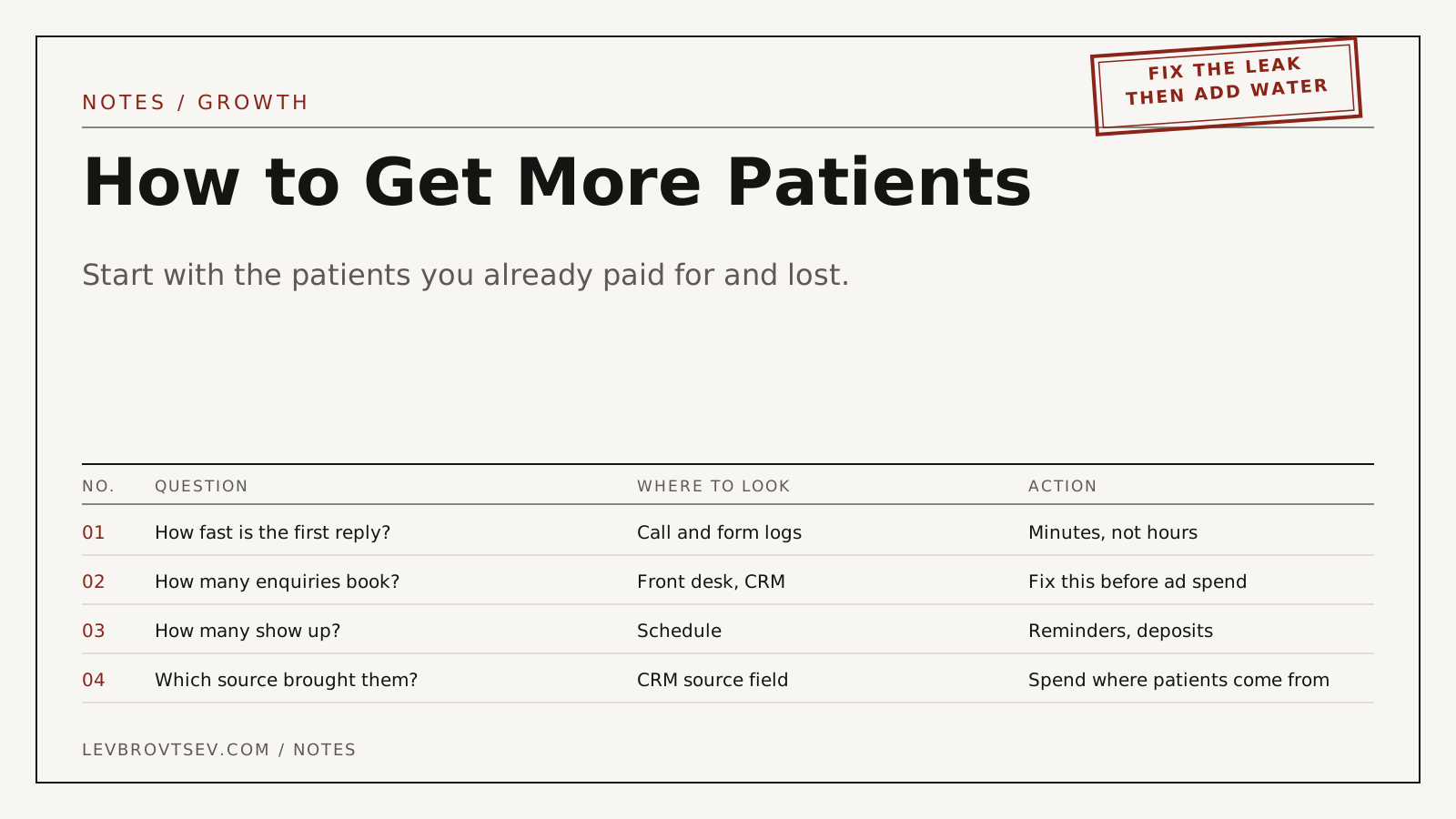
It is Thursday afternoon and next week's schedule has gaps in it. You are paying for a website, maybe an agency, maybe ads. The report says leads are up. The chairs say otherwise.
The usual response is to buy more: more budget, a new agency, a new platform. Sometimes that is right. More often the patients were already there. They called at lunchtime and nobody picked up. They filled in the form on Saturday and heard back on Tuesday. They booked, were not reminded, and did not come.
How do you get more patients without wasting money?
You get more patients without wasting money by measuring each stage between the first search and the treated patient, fixing the stage with the biggest loss first, and adding paid traffic only after enquiries are being answered fast and booked reliably. Spending on ads before that is paying to fill a bucket with a hole in it.
Where patients are lost between the click and the chair
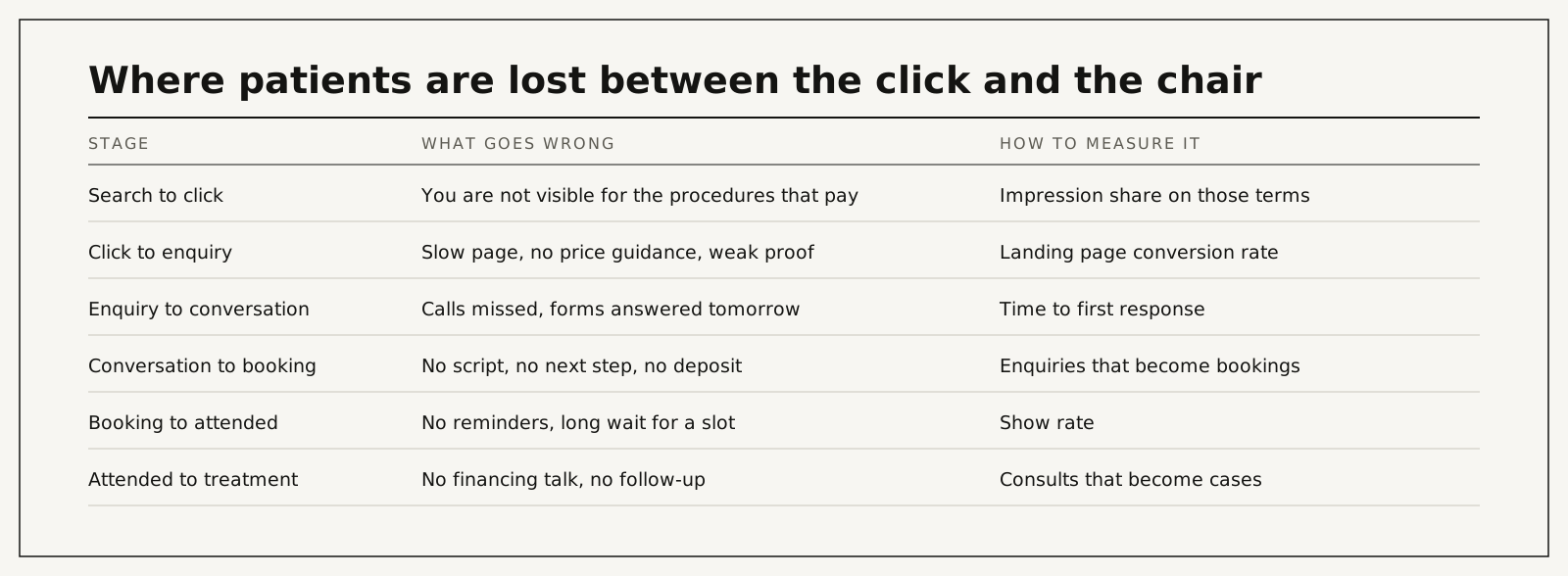
| Cause | What actually happens | Hidden cost | What you see in reports | Risk level |
|---|---|---|---|---|
| Calls missed at lunch, after 5 and on weekends | The caller rings the next clinic on the list | You paid for the click and a competitor got the patient | Nothing. Missed calls rarely appear in any report | High |
| Forms answered the next day | Interest cools, or someone else replies first | The lead is counted as a success and never becomes a booking | "Leads" rising, bookings flat | High |
| No script and no next step on the first call | The conversation ends with "I'll think about it" | Good prospects leave without a date in the diary | Low enquiry-to-booking rate, if anyone tracks it | High |
| No reminders or deposit for consultations | Booked people do not show | Clinician time wasted, slot lost | Show rate never measured | Medium |
| Procedure pages that avoid price and recovery | Visitors leave to find answers elsewhere | You attract only people who do not ask hard questions | Short visits, few enquiries from organic traffic | Medium |
| Thin reviews and an incomplete Business Profile | You lose the map results to nearby practices | Free, high-intent demand goes elsewhere | Low calls and direction requests from the profile | Medium |
| Ads aimed at everything | Budget spread over low-value services | Cost per lead looks fine, revenue per lead does not | Many conversions, few high-value cases | Medium |
| Bidding on form fills | Google finds more form fillers | Spend drifts to the cheapest, least serious traffic | Cost per lead falling while bookings stay flat | High |
The first two rows are where I would look first in almost any practice. The research is old and keeps being confirmed. A Harvard Business Review study, The Short Life of Online Sales Leads, found that companies responding within an hour were far more likely to have a meaningful conversation with the lead than those who waited even one hour longer, and the gap widened sharply after a day. I wrote about what that means for expensive services in speed to lead for high-ticket businesses.
If your situation is specifically "plenty of leads, no patients", I take that apart in why a clinic gets leads but no patients, for surgical practices in sixteen plastic surgery marketing ideas ranked by payback and in plastic surgery consultations that do not book.
Seven fixes, ranked by effort and payback
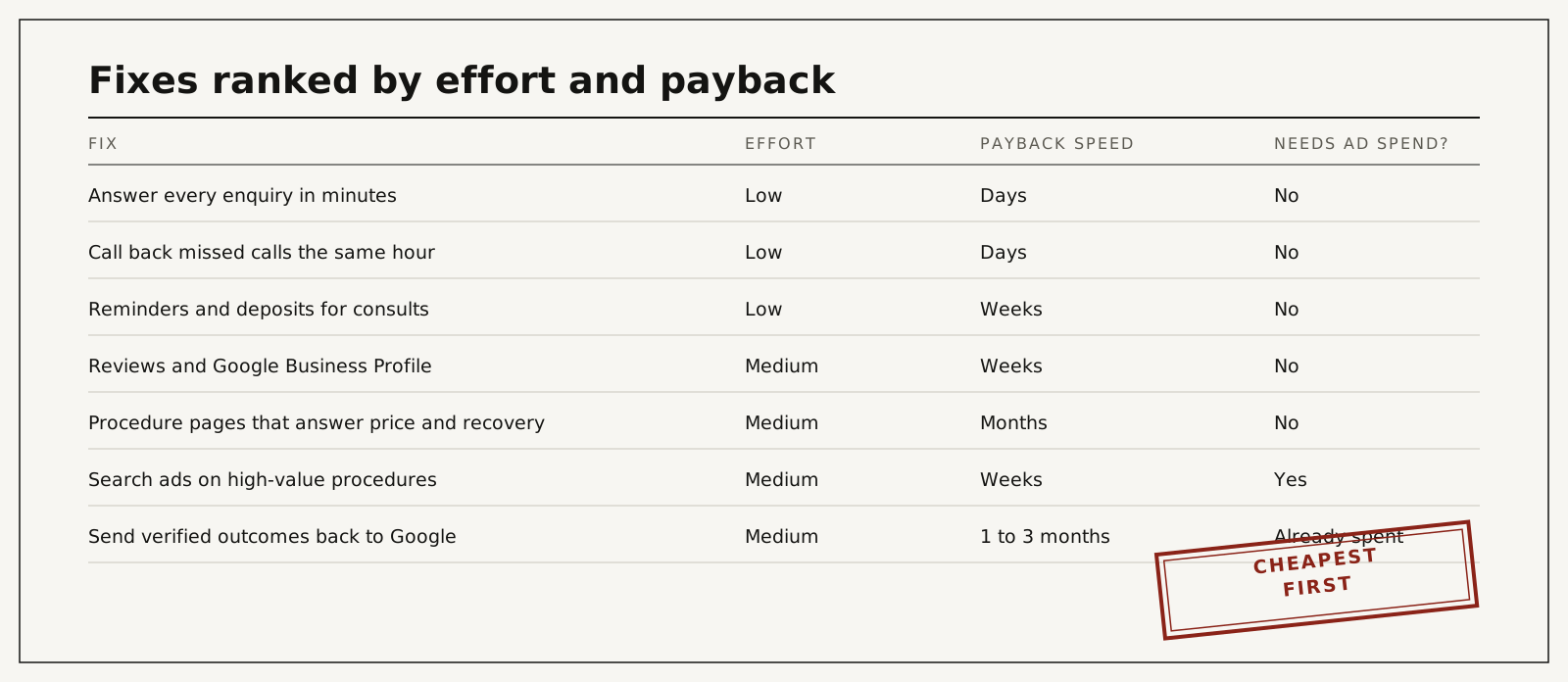
1. Answer every enquiry in minutes
Decide who owns new enquiries during opening hours and what happens outside them. A missed-call text, an answering service for evenings and weekends, and a rule that web forms get a call back within the hour. This costs little and you see the effect within days.
2. Call back missed calls the same hour
Call tracking shows you the ones you missed. Most phone systems can too. Somebody has to look at the list, every day, and ring back.
3. Reminders and a deposit for consultations
Text and email reminders, and for high-value consultations a small refundable deposit. People who pay something show up.
4. Reviews and your Google Business Profile
Ask every happy patient, make it one tap, and reply to every review. Fill in services, hours, photos and booking links. Follow Google's guidelines for representing your business, and do not offer incentives for reviews or write your own. The FTC's rule on fake reviews and testimonials is now in force. The local side is covered under local SEO for practices.
5. Procedure pages that answer the real questions
Price range or how pricing works, who is a candidate, recovery, risks, who performs it. Put a direct answer in the first paragraph. That helps Google, and it is also how practices end up named by assistants, as I describe in how clinics get cited by ChatGPT and Perplexity.
6. Search ads on the procedures that pay
Pick the two or three services where one patient pays for a month of advertising. Build campaigns only for those. Send people to the page about that procedure, not to the home page. My approach is set out under Google Ads for healthcare.
7. Tell Google which clicks became patients
Once ads run, connect them to your booking data so Google learns from attended consultations. This is the step that moves cost per patient the most and the one almost nobody does. The method is in my offline conversion tracking guide.
What each route costs
Market figures were checked in September 2026 for the US and Canada. They are ranges, not quotes.
| Route | Typical cost | Time to see more patients | What it depends on |
|---|---|---|---|
| Fix answering, call-backs and reminders yourself | Staff time, plus a small monthly fee for call tracking or an answering service | Days to weeks | Someone owning the process |
| Reviews and Business Profile | Staff time | Weeks | Asking consistently |
| Rewrite key procedure pages | Your time or a writer's fee | Two to four months for search to respond | How competitive the procedure is locally |
| Search ads managed by an agency | Most agencies charge 10% to 20% of ad spend, or $2,500 to $7,500 a month for mid-sized accounts, plus a one-time setup fee of $500 to $5,000 | Weeks | Whether they measure patients or leads |
| Search ads and tracking managed by me | My standard retainer is $5,000 a month, adjusted to budget and workload. Against the market norm of 10% to 20% of spend, that is in line for accounts spending roughly $25,000 to $50,000 a month. Under about $10,000 a month in ad spend, start with the $500 audit and a fixed project | Weeks for traffic, one to three months for cost per patient to settle | Procedure value, local competition, booking data |
| Change nothing | Nothing new | Never | The gaps in the schedule stay where they are |
What "change nothing" costs is easy to estimate for your own practice. Count last month's missed calls and late replies. Multiply by your booking rate and by what an average new patient is worth. That figure is usually larger than the ad budget people are arguing about.
Do it yourself, hire an agency, or hire a consultant
| Option | Cost | Time to result | Risk | When it makes sense |
|---|---|---|---|---|
| Do it yourself | Lowest | Fast for fixes one to four | It slides when the practice gets busy | Small practice, an organized manager |
| Agency | Monthly fee | Medium | Reports on leads, not patients. Junior staff on your account | You need content, design, social and ads from one supplier |
| Consultant | Monthly fee or fixed project | Fast | Depends on one person | You want ads and measurement run by the person you speak to, and judged on patients |
| Keep buying more traffic without fixing the leaks | Highest | None | You scale the waste | Never |
Agencies are the better choice when you need many hands: photography, social posts, a new website, print. If the question is narrower, which clicks become patients and how to get more of those, a single experienced person is usually faster. Either way, ask the same question before signing: "Will you report cost per patient who attended?" I list more in how to hire a healthcare performance marketing consultant.
How I approach it
I start with last month's enquiries, not with the ad account. How many came in, from where, how fast each was answered, how many booked, how many showed. That usually takes a morning with your front desk and your phone logs, and it tells me which of the six stages is costing the most.
Then I fix in order of payback. Answering and call-backs first, because they are free. Tracking second, so every later decision rests on patients and not forms. Campaigns third, narrowed to the procedures that pay. Only then do I talk about more budget.
After 30 days you know your numbers for each stage. After 60, the ad account is learning from attended consultations. After 90, you can see cost per patient by procedure and decide where to grow. That sequence is what produced the one result I quote: I inherited an underperforming account and rebuilt it; cost per acquisition came down by about 78% while spend grew. The argument for measuring this way is in cost per patient versus cost per lead.
A 15-minute monthly check
- New enquiries, by source.
- Median time to first reply. Separate weekday hours from evenings and weekends.
- Missed calls, and how many were called back within an hour.
- Enquiries that became bookings.
- Bookings that showed.
- New patients by source, and what you spent on each source.
Six numbers. If nobody in your practice or your agency can produce them, that is the first thing to fix.
The audit covers your ad account, the tracking and the path from enquiry to booked patient, and ends with a 90-day plan. It is credited toward the first month if you continue with me.
You work with me directly. There are no account managers and no juniors.
If you would like those six numbers found for you and turned into a 90-day plan, that is what my audit does: the ad account, the tracking and the path from enquiry to booking, reviewed by me and explained in plain language. The audit is $500 per ad account, comes with a 90-day plan, and is credited toward the first month if you continue with me. You work with me directly, with no account managers in between. Book a call or write first.
Start with last month's enquiries
Before you approve another dollar of advertising, pull last month's calls and forms and find out what happened to each one. The patients you are looking for may already have tried to reach you. Fix that first, then make the pages and the profile do their share, then buy traffic for the procedures that pay and measure it on people who came through the door. If you want help finding the numbers, start with the audit.
Frequently asked questions
What is the fastest way to get more patients?
Answer faster. Reply to web enquiries within minutes and return missed calls within the hour. It costs almost nothing and affects demand you have already paid for.
How much should a practice spend on marketing?
There is no honest universal figure. Work backwards: what a new patient is worth for your main procedures, how many you want, and what share of that value you are willing to pay to acquire one. Then check that answering and booking are solid before spending it.
Do Google Ads work for medical practices?
Yes, for procedures with real search demand and enough value per patient, when campaigns are narrow and measured on attended consultations. They disappoint when aimed at everything and measured on form fills.
Can I do this myself?
The first four fixes, yes, and you should. Ads and tracking are learnable, but mistakes are paid for in ad spend, so most owners are better off hiring for that part.
How long until I see results?
Answering and reminders: days to weeks. Reviews and profile: weeks. New pages: months. Ads: traffic in days, a reliable cost per patient in one to three months.
What if I already have an agency?
Ask for the six numbers above, and for cost per attended patient by campaign. A good agency will have them or will get them. If the answer is a slide about impressions and clicks, you have learned something useful.
Who does the work if I hire you?
I do. Strategy, campaign builds, tracking and reporting. Nothing is handed to a junior or subcontracted.
How do I know which patients came from marketing?
By storing the source and the ad click ID on each enquiry in your CRM or booking system, and following that record to the appointment. It is simpler than it sounds. I explain the ID in what a GCLID is.