Notes
Healthcare Marketing Strategy: A Plan Built on Patients, Not Clicks
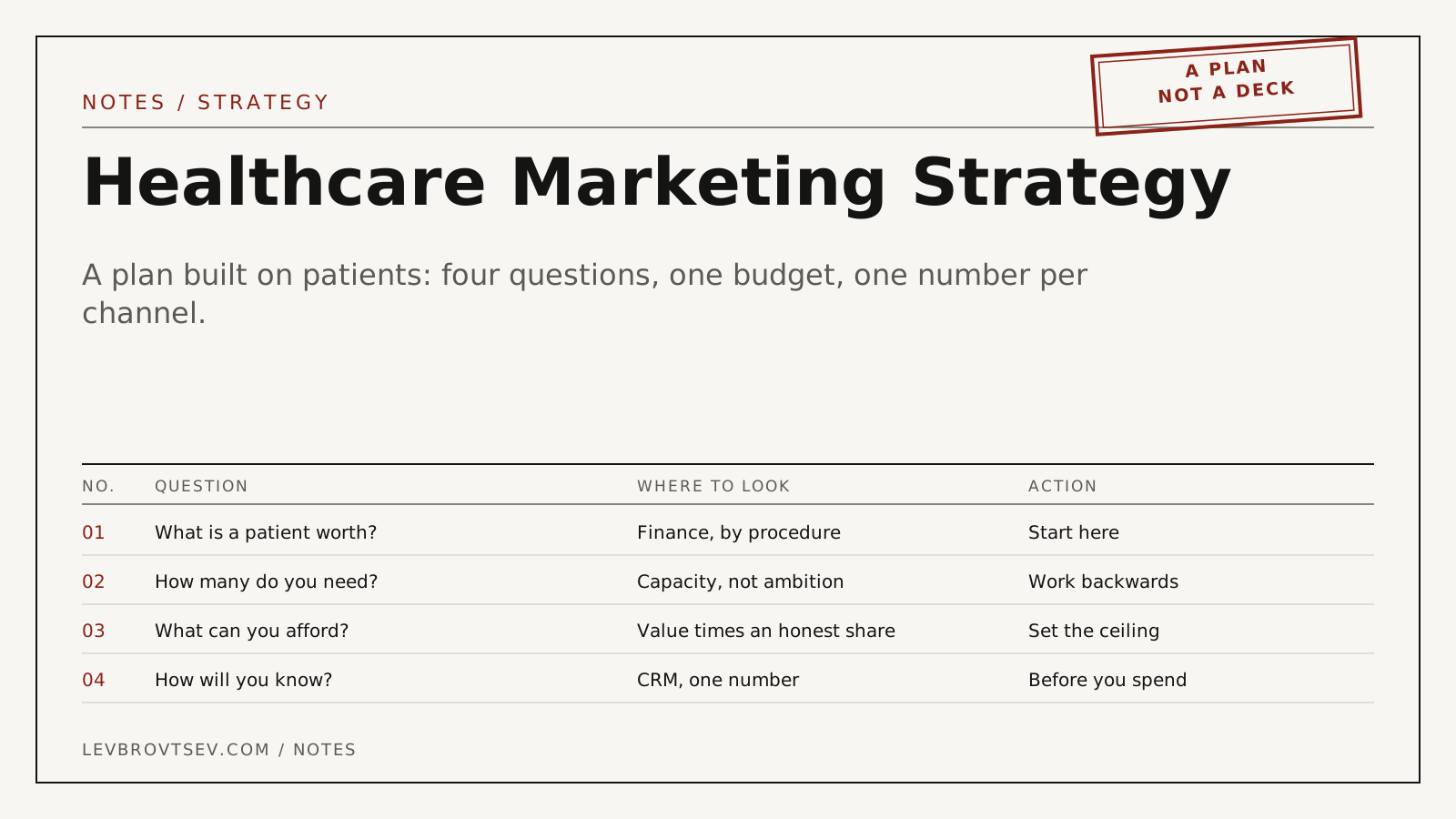
A healthcare marketing strategy is a chain of four numbers: what a patient is worth, how many you need, what you can afford to pay for one, and how you will know when it happened. Channels come after those, not before. Any plan that opens with a channel list is a proposal, not a strategy.
Key takeaways
- Build the plan backwards: revenue target, patients, enquiries, traffic, budget. Every number is already in your own systems.
- Capacity, not ambition, sets the patient target. A plan that fills a schedule you cannot staff is a way to lose patients.
- Allocate by stage of the practice. A quiet schedule and a plateaued one need opposite first moves.
- One number per channel: cost per attended patient. If a channel cannot report it, it cannot be judged.
- Most practices should fix sequence before they increase spend.
Contents
- What is a healthcare marketing strategy?
- The four questions, in order
- Build the plan backwards
- What you can afford to pay for a patient
- Where the budget goes, by stage
- The compliance constraints that shape the plan
- What goes wrong with most plans
- What it costs to build and run
- In-house, agency or consultant
- The quarterly review
- Write down the four numbers first
Every agency proposal you have read starts in the same place: a channel mix, a content calendar, a set of KPIs ending in "brand awareness". None of it tells you how many patients the plan is supposed to produce, or what you are willing to pay for one.
A strategy is the arithmetic that makes those decisions obvious. It takes an afternoon and your own data.
What is a healthcare marketing strategy?
A healthcare marketing strategy is a written plan that converts a revenue target into a number of patients, a number of enquiries and a budget, then names the channels and the measurement that will deliver and verify them. In regulated fields it also names the ad-policy and privacy limits that decide which tactics are available at all.
The four questions, in order
- What is a patient worth here? Not revenue per visit. The value of a case, by procedure, over the relationship.
- How many more can you actually serve? Chairs, operating days, clinician hours, front-desk capacity.
- What are you willing to pay to acquire one? A defensible share of the value, decided before anyone quotes you a cost per click.
- How will you know it happened? Which system records the patient, and who reads it every month.
If any one of these is a guess, the plan downstream is fiction.
Build the plan backwards
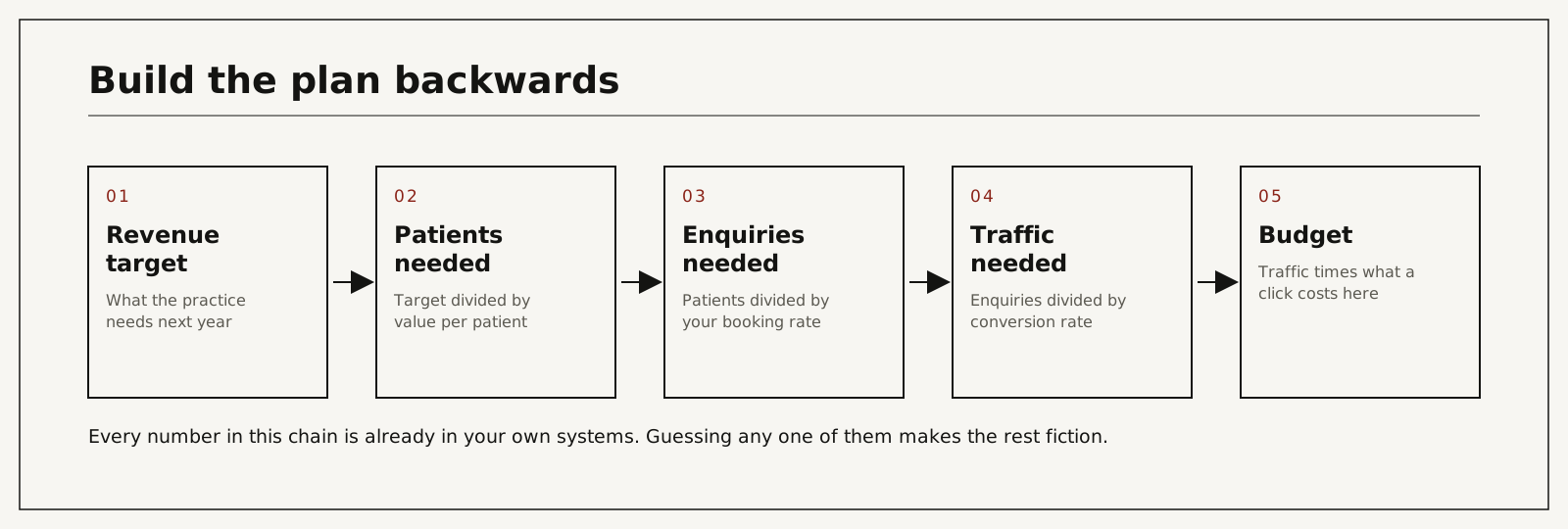
Work down the chain with your own figures.
Start with the revenue the practice needs from new patients next year. Divide by the value of a typical case in the procedures you want to grow, and you have the number of patients. Divide that by the share of enquiries that become booked, attended patients, and you have the enquiries you need. Divide by the share of visitors who enquire, and you have the traffic. Multiply the traffic by what a click costs in your market, and you have the paid media budget for that slice.
Two things usually go wrong at this point.
The booking rate turns out to be unknown, which means the whole chain is guesswork and the first project is measurement rather than marketing. Or the arithmetic produces a budget nobody will approve, which is useful information: it means the current conversion rates, not the budget, are the constraint.
What you can afford to pay for a patient
There is no universal percentage, and anyone who quotes one is selling something. The honest version is a range you set yourself:
| Input | Where it comes from | Note |
|---|---|---|
| Value of a case | Practice software, by procedure | Use production, not gross charges |
| Repeat and referral value | Two or three years of history | Often doubles the first figure |
| Gross margin on that case | Your finance person | Marketing is paid from margin, not revenue |
| Share of margin you will spend | Your decision | Write it down before you see any quotes |
| Result | Maximum cost per attended patient | This is the number you manage to |
Then compare it with reality. If a full-arch case carries several thousand dollars of margin and your maximum is a few hundred per attended patient, paid search on that procedure is comfortable. If a routine service carries a hundred dollars of margin, no paid channel will ever work for it and the answer is reviews, recall and the Business Profile. The full argument is in cost per patient versus cost per lead.
Where the budget goes, by stage
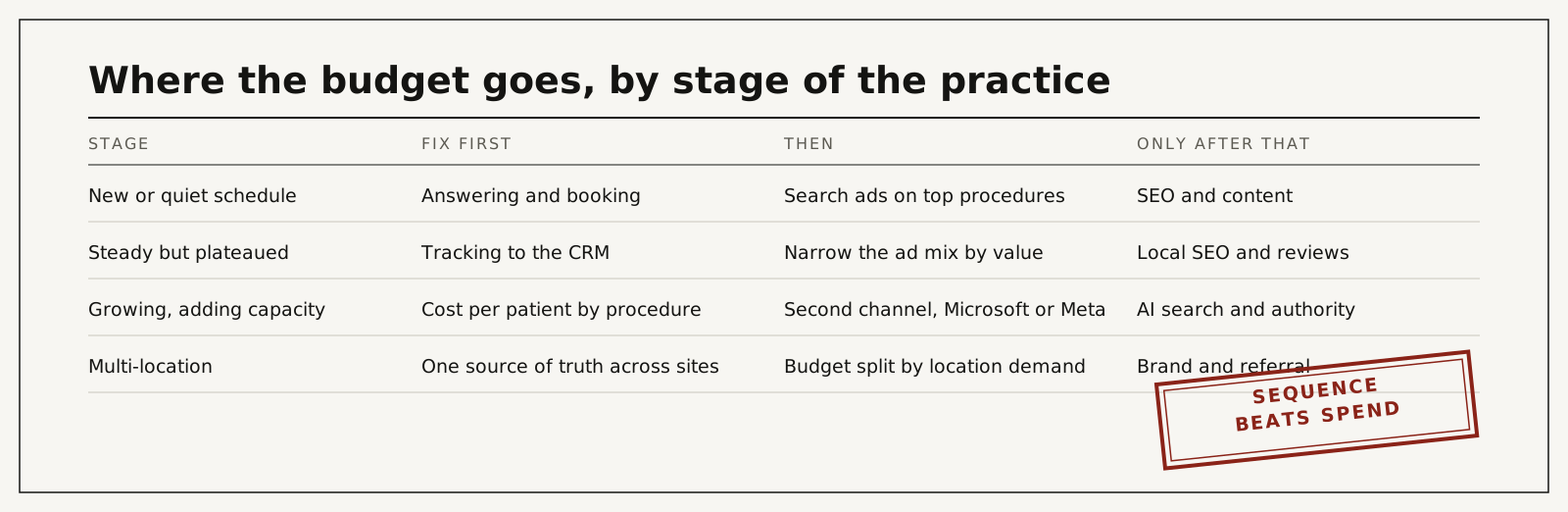
| Stage | Fix first | Then | Only after that |
|---|---|---|---|
| New or quiet schedule | Answering, booking, reviews | Search ads on top procedures | SEO and content |
| Steady but plateaued | Tracking through to the CRM | Narrow the ad mix by case value | Local SEO and authority |
| Growing, adding capacity | Cost per patient by procedure | A second channel | AI search visibility |
| Multi-location | One source of truth across sites | Budget split by local demand | Brand and referral work |
The channels themselves, what each does and what it costs, are set out in healthcare digital marketing. This page decides the order and the size; that one decides the mix.
The compliance constraints that shape the plan
In healthcare, a strategy that ignores policy produces a budget you cannot spend.
Audience targeting based on health interest is restricted under Google's personalized advertising policy, so remarketing to people who viewed a procedure page is not available to you the way it is to a retailer. Certain categories, pharmacy, prescribing telehealth and US addiction treatment, cannot advertise at all without third-party certification: see LegitScript certification. And patient data cannot be sent to ad platforms, which changes how the measurement layer is built: click-ID-only conversion feeds.
Plan around these at the start. Discovering them in month three costs a quarter.
What goes wrong with most plans
| Cause | What actually happens | Hidden cost | What you see | Risk level |
|---|---|---|---|---|
| The plan starts with channels | Budget is allocated before anyone knows what a patient is worth | Money in the wrong place for a year | A channel list with no target patient count | High |
| Booking rate never measured | The whole chain is guesswork | Every forecast is wrong | Nobody can answer "how many enquiries booked?" | High |
| Growth planned beyond capacity | Enquiries arrive and cannot be seen quickly | Paid-for patients go elsewhere | Long waits for a first appointment | High |
| One cost per lead target across all procedures | Cheap services look efficient, valuable ones look expensive | Budget drifts to low-value work | Volume up, production flat | High |
| KPIs that cannot be tied to revenue | Reporting becomes a performance | A year of activity, no verdict | Impressions and engagement in the monthly deck | Medium |
| Compliance considered after launch | Campaigns rebuilt or suspended | Weeks lost, sometimes an account | Disapprovals in month one | Medium |
| No owner for the number | Nobody is accountable between meetings | Drift | "The agency handles that" | Medium |
What it costs to build and run
Market figures were checked in September 2026 for the US and Canada. They are ranges, not quotes.
| Route | Typical cost | Time to a usable plan | What it depends on |
|---|---|---|---|
| Write it yourself from this page | An afternoon, plus whatever it takes to find the numbers | Days | Whether your CRM can report stages |
| Agency strategy engagement | Often bundled into a retainer of 10% to 20% of ad spend, or $2,500 to $7,500 a month | Weeks | Whether they will report on patients |
| Independent audit and plan | $500 per ad account, credited toward the first month if you continue with me | Days | Access to the ad account and the CRM |
| Ongoing management | Retainers from $5,000 a month, adjusted to budget and workload | Ongoing | Number of channels and locations |
| No plan | Nothing on paper | Never | Spend continues without a verdict |
In-house, agency or consultant
| Option | Cost | Time to result | Risk | When it makes sense |
|---|---|---|---|---|
| In-house marketing lead | Salary | Medium | Plan quality depends on one hire | Multi-location groups |
| Agency | Retainer | Medium | Plans written to suit the services they sell | You need production capacity too |
| Consultant | Fixed project, then retainer | Fast | Depends on one person | You want the plan and the execution from the same hands |
| No formal plan | None | None | Spend without a verdict | Never |
An agency is often right for execution. For the plan itself, be careful about asking a supplier to recommend what to buy from them. The questions worth asking either are in how to hire a healthcare performance marketing consultant.
The quarterly review
- Patients by source, and cost per attended patient by procedure.
- Booking rate and show rate. If these moved, everything upstream changes.
- Capacity: are you turning people away, or waiting for them?
- What the plan said this quarter would produce, next to what it produced.
- One decision: keep, narrow, or stop.
That last line is the whole point of writing the plan down. Without a target, nothing can be stopped.
The audit covers your ad account, the tracking and the path from enquiry to booked patient, and ends with a 90-day plan. It is credited toward the first month if you continue with me.
You work with me directly. There are no account managers and no juniors.
Write down the four numbers first
Before your next agency call, write down what a patient is worth, how many you can serve, what you will pay for one, and which system will record it. The conversation changes completely once those four exist on paper, and so does what you buy. If you would like them established from your own account and CRM, start with the audit, or see how the measurement side works under CRM-verified attribution.
Frequently asked questions
How do I build a healthcare marketing strategy?
Start with what a patient is worth and how many you can serve, work backwards to enquiries, traffic and budget, then choose channels that match your decision cycle. Write down the one number you will judge each channel on before you spend.
What should a healthcare marketing budget be?
A share of the margin on the cases you want to grow, not a percentage of revenue copied from an industry article. Decide the maximum cost per attended patient first; the budget follows from the patient target.
How long should the plan cover?
Twelve months for the targets, ninety days for the actions. Anything more detailed than a quarter out will be rewritten anyway.
What if we do not know our booking rate?
Then that is the first project. Two weeks of counting enquiries and what happened to each one is enough to start, and it usually changes the plan more than any channel decision.
Should the plan include social media?
Only with a job to do and a number attached. In healthcare, social builds familiarity and shows the provider; it rarely produces cases on its own.
Who should own the plan internally?
One named person who can see both the enquiry data and the schedule. Usually the owner in a single practice, a marketing lead in a group.
Who does the work if I hire you?
I do: the plan, the campaign builds, the tracking and the reporting. Nothing is subcontracted or delegated.
How do we verify the strategy is working?
Cost per attended patient by procedure, reviewed monthly, against the maximum you set at the start. If it is inside the number and patient volume is rising, keep going.