Notes
Healthcare Marketing Trends for 2027: What Actually Changes the Budget
Five things changed enough this year to alter how a clinic spends: patients now get shortlists from AI assistants before they search, ad platforms decide placement from your conversion signal, privacy enforcement narrowed which tools may hold patient data, more searches end without a click, and review rules tightened. Everything else on the usual trends list is decoration.
Key takeaways
- Assistants answer before search results are seen. If you are not in the answer, the ranking does not matter.
- With automation deciding placement, the conversion signal is the only real lever left.
- Privacy enforcement has widened beyond HIPAA covered entities. Cash-pay clinics are not exempt.
- Zero-click results mean SEO judged on traffic alone will look like it is failing while working.
- Incentivised reviews are now an enforcement matter, not a grey area.
Contents
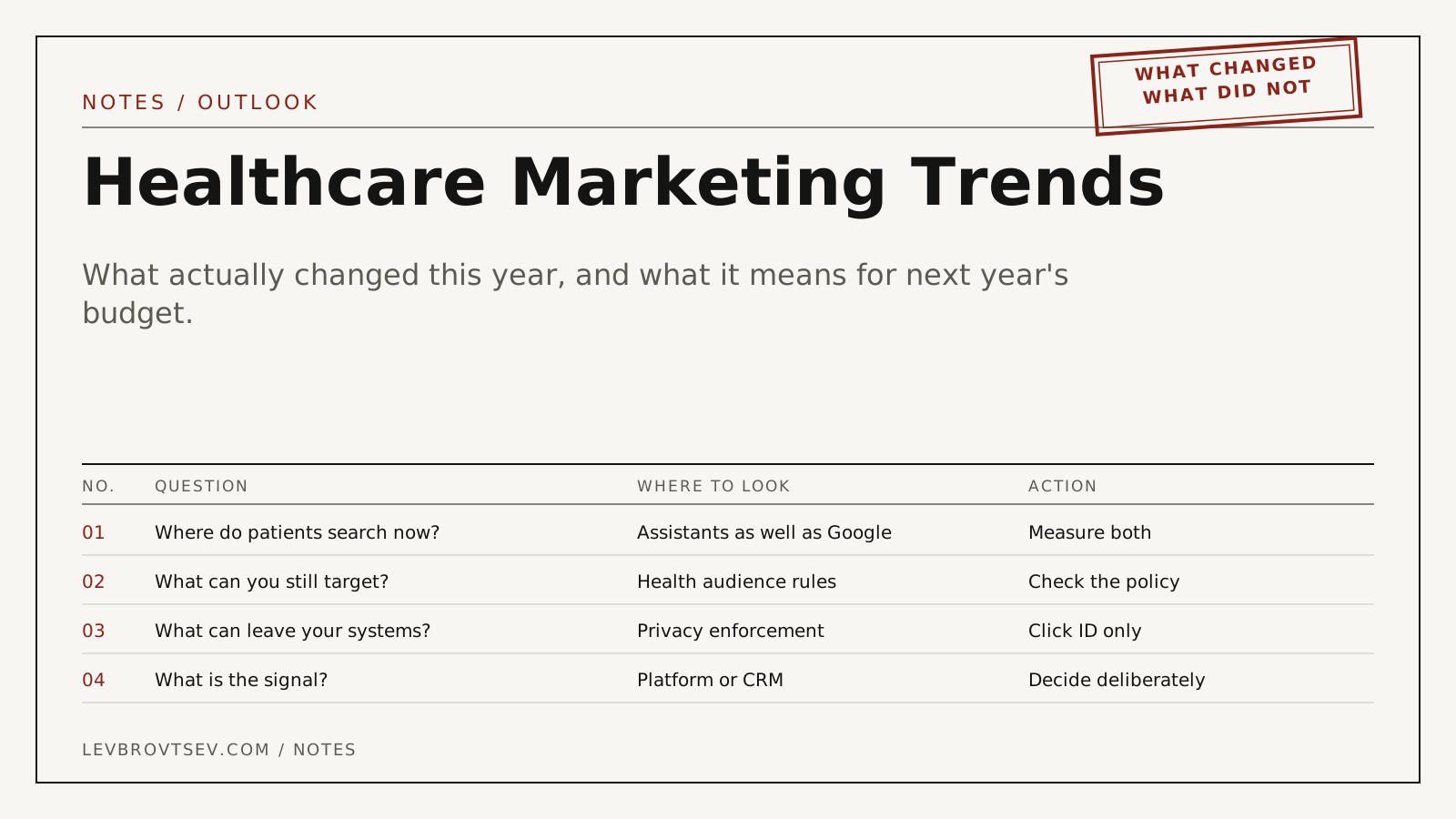
Most trend articles are a list of technologies. This one is a list of things that change where money goes. If a development does not change a budget line, it is not a trend, it is news.
What changed, and what did not
What did not change: patients still choose a clinic on trust, proximity and price clarity. The front desk still loses more patients than any algorithm. High-value procedures still justify paid search and routine ones still do not.
What changed is the route to the shortlist, and what the platforms need from you to spend your money well.
The five shifts
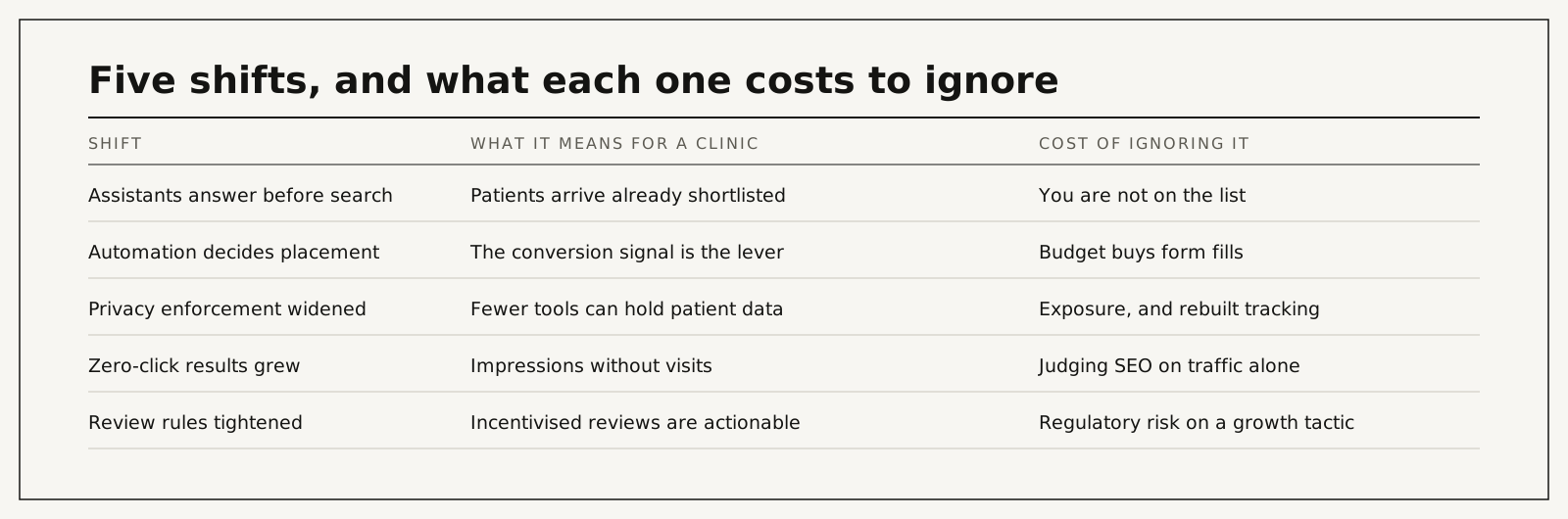
1. Assistants answer before search
Patients ask ChatGPT, Gemini or Perplexity who does a procedure well in their city, and arrive with two or three names already. Being ranked fourth on Google is irrelevant to that conversation.
On my own site over the last ninety days, AI assistants sent under three percent of sessions and produced more than a quarter of the actions that matter. Small volume, high intent. The method for earning citations is in how to rank in ChatGPT and Perplexity, and the service is AI search.
2. Automation decides placement, so the signal is the lever
Performance Max and Smart Bidding took targeting decisions away from the advertiser. What is left is the conversion definition, and it decides everything downstream. Feed form fills and the system finds form fillers. Feed verified patients and it finds patients. See what Performance Max is and the offline conversion tracking guide.
3. Privacy enforcement widened
The HHS bulletin on online tracking technologies still governs authenticated pages and disclosures to vendors, after a 2024 court decision struck down one narrow part of it. Separately, the FTC has pursued health companies that were not HIPAA covered entities at all. The practical effect is the same for a marketer: fewer tools may hold patient data, and what you send to ad platforms must be minimal. The design is in click-ID-only conversion feeds, with the tooling questions in HIPAA-compliant CRM and HIPAA-compliant forms.
4. More searches end without a click
AI Overviews and rich results answer more questions on the results page. Impressions rise, clicks do not follow, and an SEO program judged on sessions looks like it is failing while it is building the visibility that assistants read.
5. Review rules tightened
The FTC's rule on consumer reviews and testimonials is in force. Incentivised reviews, review gating and anything written in-house are now enforcement matters rather than tactics with a small risk attached.
What each one costs to ignore
| Cause | What actually happens | Hidden cost | What you see | Risk level |
|---|---|---|---|---|
| No entity or answer work | Assistants name competitors in your city | Demand that never reaches your site | Flat direct traffic, rising competitor mentions | High |
| Bidding on form fills | Automation buys the cheapest enquiries | Budget drifts away from patients | Conversions up, schedule flat | High |
| Tags left on booking and intake steps | Health details sent to vendors with no agreement | A privacy problem, plus rebuilt tracking | Procedure names in analytics reports | High |
| SEO judged on sessions only | A working program looks like a failing one | Programs cut in month six | Impressions up, clicks flat | Medium |
| Incentivised or gated reviews | Now an enforcement matter | Regulatory exposure on a growth tactic | Sudden review velocity | Medium |
What to change in next year's budget
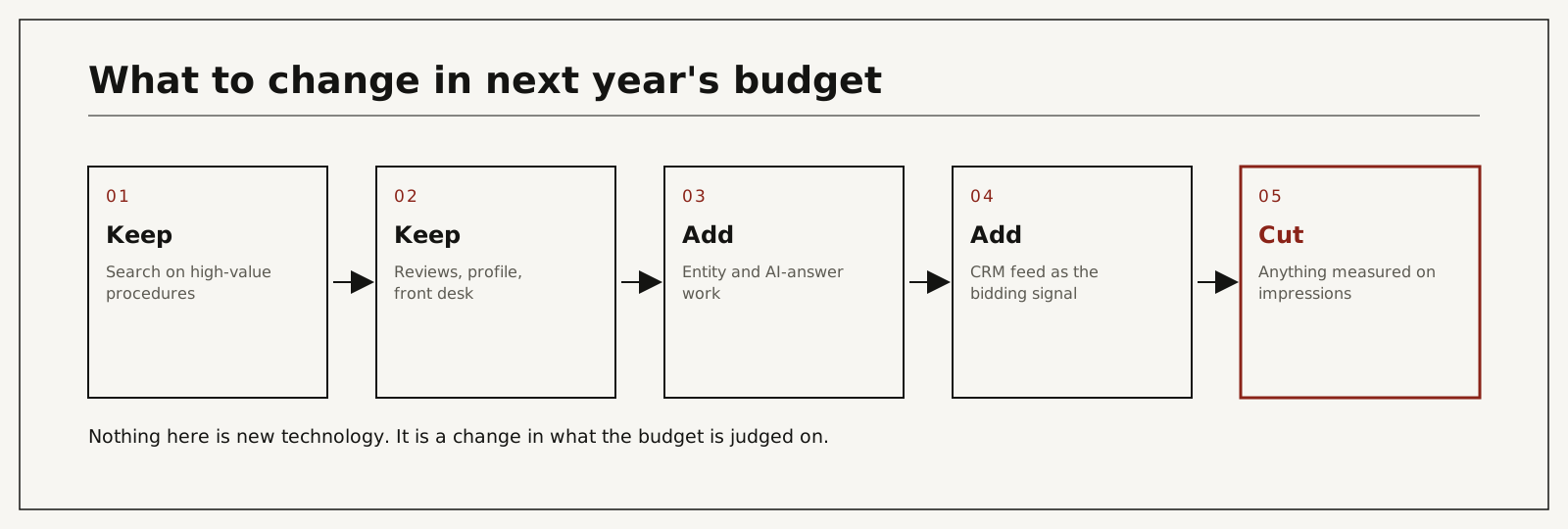
Keep: search advertising on high-value procedures, reviews, the Business Profile and the front desk. These have not moved and they still produce most of the patients.
Add: entity and answer work so assistants can name you, and the CRM feed so bidding learns from attended patients rather than forms. Both are one-time builds with small ongoing costs.
Cut: anything measured on impressions, engagement or leads alone. Not the channel necessarily, the metric.
What is not a trend
Every year brings a list of things that will not change your budget: new social platforms with no healthcare buying intent, chatbots that answer questions your booking page should already answer, and "personalisation" that is mostly not permitted in a sensitive health category anyway.
Before adopting any of them, ask the same question you would ask of an agency: what number does this move, and where would I see it?
The audit covers your ad account, the tracking and the path from enquiry to booked patient, and ends with a 90-day plan. It is credited toward the first month if you continue with me.
You work with me directly. There are no account managers and no juniors.
One budget line to add, one to cut
Add the CRM feed so bidding learns from patients. Cut any line item whose only report is impressions. Those two moves cost almost nothing and change what every other channel does for the rest of the year. If you would like both assessed on your own account, start with the audit.
Frequently asked questions
What is the biggest change in healthcare marketing right now?
That patients arrive with a shortlist produced by an AI assistant. It changes what "being findable" means, and it cannot be bought.
Should we shift budget from Google Ads to AI search?
No. They do different jobs and AI visibility is not a media buy. Fund it as a one-time structural project and keep paid search doing the capture.
Is SEO still worth it if searches end without clicks?
Yes, and the measurement has to change. Judge it on impressions, citations and assisted enquiries as well as sessions, or you will cut a program that is working.
Do privacy rules apply to a cash-pay clinic?
Possibly not HIPAA, but the FTC and state health-privacy laws can still apply to what you share with ad platforms. Design as if they do.
Are AI-written pages a problem?
Thin, unattributed pages are. What assistants and search engines both reward is a direct answer attributable to a real, credentialed person. That is a standard, not a tool ban.
How often should this page be revisited?
Annually. It is refreshed on the same URL each year rather than republished with a new address, so the history stays in one place.
Who does the work if I hire you?
I do: the entity work, the tracking and the media. Nothing is subcontracted or delegated.
How do we verify any of this is working?
Two checks. A monthly log of which sources assistants name for your core patient questions, and cost per attended patient from your CRM. If both improve, the budget changes worked.