Notes
Dental Marketing Ideas, Ranked by Cost per New Patient
The dental marketing ideas that pay back fastest cost almost nothing: answer calls and web forms within minutes, call back every missed call, and ask every happy patient for a review. After that come procedure pages with real prices, search ads on the two or three treatments that justify them, and sending booked patients back to Google so bidding learns from cases rather than clicks.
Key takeaways
- Most practices lose more patients at the front desk than they fail to attract online.
- Rank every idea by cost per new patient. Reach, followers and leads are not the number.
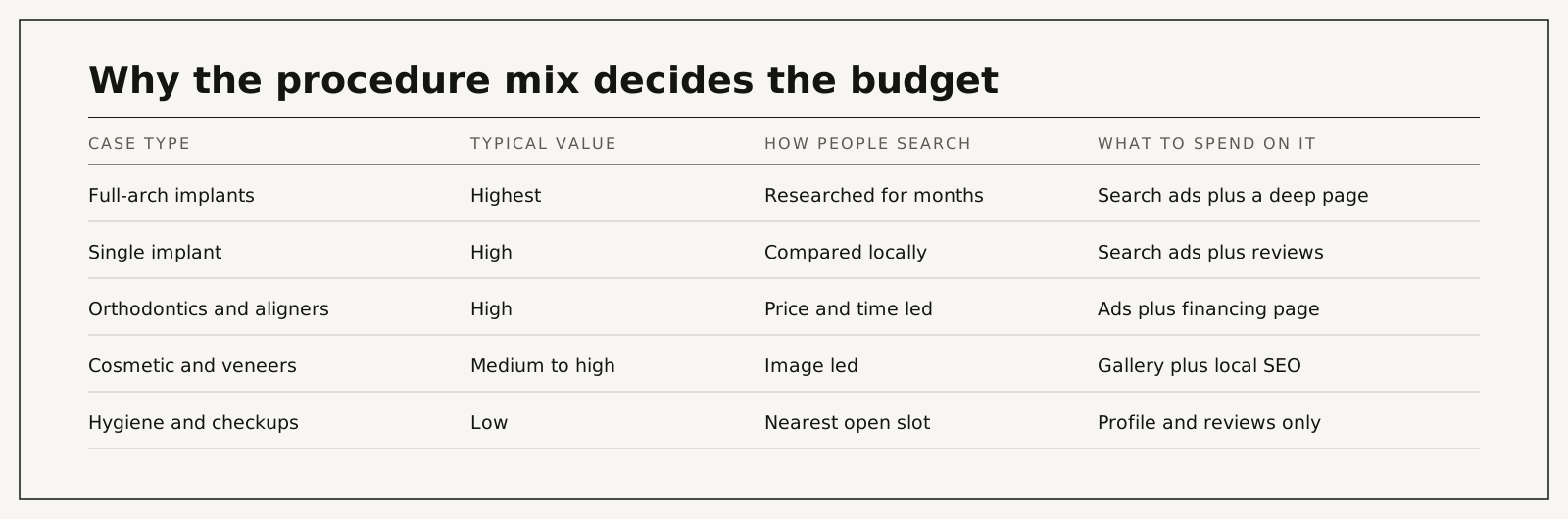
- Your procedure mix decides the budget. A full-arch case and a hygiene visit do not deserve the same spend.
- Dental is not a restricted ad category, so most disapprovals come from claims and imagery rather than policy categories.
- If nobody can tell you which source produced last month's implant cases, that is idea number one.
Contents
- Which dental marketing ideas actually work?
- The ranking
- Ideas 1 to 5: the front desk
- Ideas 6 to 11: be found by people already looking
- Ideas 12 to 15: paid traffic, aimed narrowly
- Ideas 16 to 18: the long game
- Why the procedure mix decides the budget
- What each route costs
- A 90-day order
- Start with last month's calls
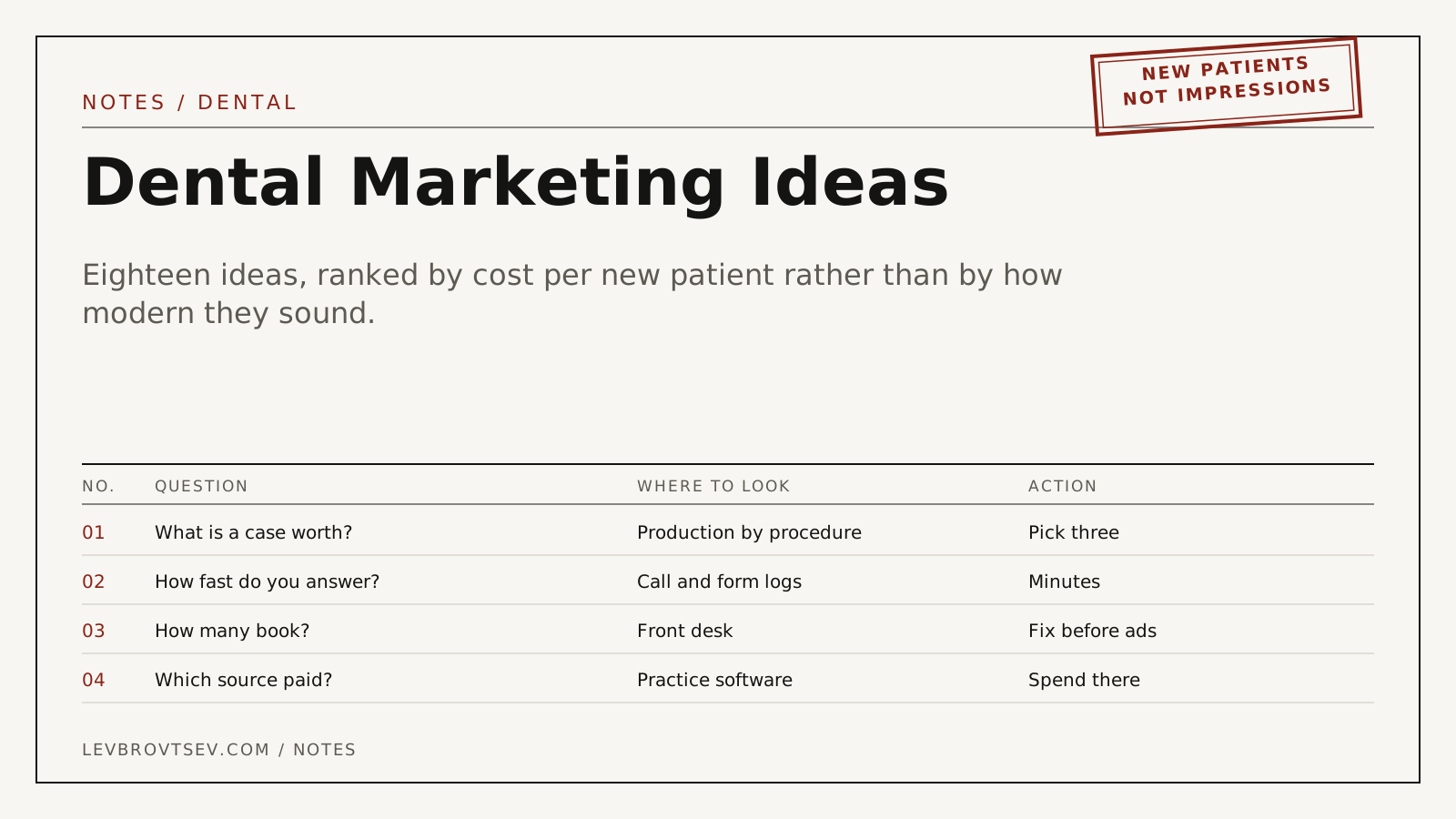
Every list of dental marketing ideas contains the same twenty items: post before-and-afters, run a whitening promotion, start a newsletter, try TikTok. None of them tells you what to do first, what it costs, or how you would know it worked.
This list is ordered by payback. Each idea carries a cost, a time to result and one number to judge it by. The order comes from what I see move booked cases in dental accounts, starting with the free things.
Which dental marketing ideas actually work?
The dental marketing ideas that work are the ones you can tie to booked, attended patients. In practice that means fast enquiry handling, a strong review profile, procedure pages that answer price and recovery, and narrow search advertising on high-value treatments, all measured on cost per new patient rather than cost per lead.
The ranking
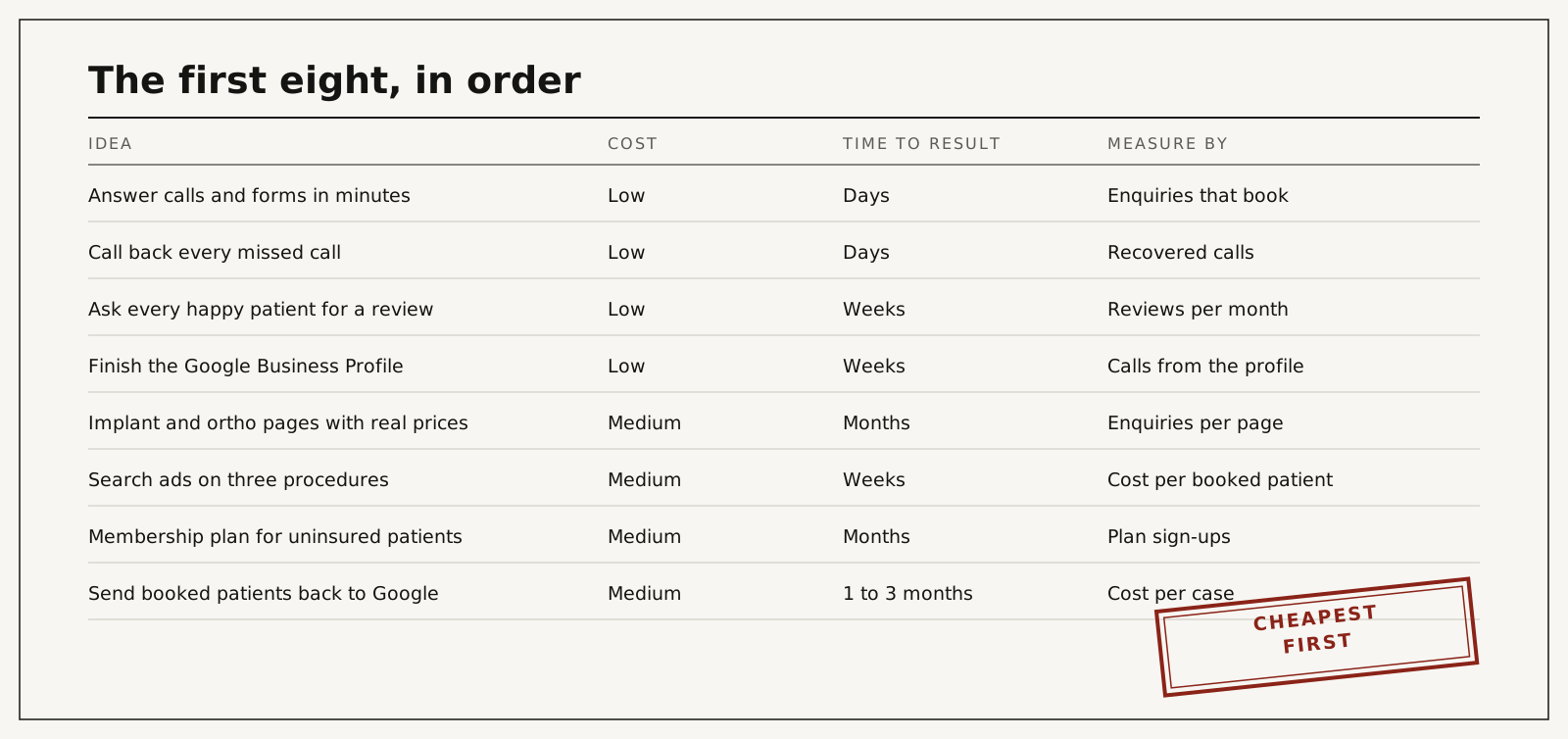
| # | Idea | Cost | Time to result | Measure by |
|---|---|---|---|---|
| 1 | Answer calls and forms in minutes | Low | Days | Enquiries that book |
| 2 | Call back every missed call the same hour | Low | Days | Recovered calls per week |
| 3 | Ask every happy patient for a review | Low | Weeks | New reviews per month |
| 4 | Finish the Google Business Profile | Low | Weeks | Calls and direction requests |
| 5 | Store the source and click ID on every enquiry | Low | Weeks | Share of cases with a known source |
| 6 | Implant and ortho pages with real price ranges | Medium | Months | Enquiries per page |
| 7 | Online booking that actually works on a phone | Medium | Weeks | Bookings started versus finished |
| 8 | Recall and reactivation for lapsed patients | Low | Weeks | Reappointed patients |
| 9 | Financing and membership options, stated clearly | Low | Weeks | Cases that mention financing |
| 10 | Answers written for AI assistants | Medium | Months | Named citations, enquiries |
| 11 | Local pages for each location you serve | Medium | Months | Map pack position |
| 12 | Search ads on two or three procedures | Medium to high | Weeks | Cost per booked patient |
| 13 | Microsoft Ads on the same terms | Medium | Weeks | Cost per booked patient |
| 14 | Send booked patients back to Google | Medium | 1 to 3 months | Cost per case |
| 15 | Call tracking on every number you advertise | Low | Weeks | Calls attributed to a source |
| 16 | Video answers from the dentist | Medium | Months | Time on procedure pages |
| 17 | Referral relationships with specialists | Low | Months | Referred consultations |
| 18 | Patient photo and case library, done properly | Medium | Months | Gallery to enquiry rate |
Ideas 1 to 5: the front desk
1. Answer calls and forms in minutes
Someone researching an implant has three practices open. The one that answers first gets the conversation. Decide who owns new enquiries during opening hours and what happens at 6pm and on Saturday. The response-time evidence is old and consistent, from Harvard Business Review's study of online sales leads onward, and I cover it for expensive services in speed to lead for high-ticket businesses.
2. Call back every missed call
Your phone system or call tracking already lists them. Somebody has to open that list daily and ring back. In most practices this alone recovers more patients than a new campaign would buy.
3. Ask every happy patient for a review
Make it one tap at checkout, reply to every review, never offer incentives and never write your own. The FTC's rule on consumer reviews and testimonials applies to dental practices like everyone else.
4. Finish the Google Business Profile
Services listed by procedure, accurate hours, real photos, booking link, dentist profiles. This is what decides the map pack, and the map pack decides who gets the call for "dentist near me". More under local SEO for practices.
5. Store the source and click ID on every enquiry
One field for source, one for the ad click ID, on every form and call. Without them, every idea below is judged on instinct. The identifier is explained in what a GCLID is, and the privacy side of call tracking in dental call tracking without breaking HIPAA.
Ideas 6 to 11: be found by people already looking
6. Implant and ortho pages with real price ranges
One page per high-value procedure: a direct answer in the first paragraph, who is a candidate, how pricing works with an honest range, what the process and recovery look like, who performs it. Practices avoid price because they fear losing people. What happens instead is that people leave to find it somewhere else.
7. Online booking that works on a phone
Most dental enquiries start on a phone. If the booking widget needs pinching and zooming, or asks for insurance details before it will show a slot, you are losing people who were ready. Test it yourself on your own phone this week.
8. Recall and reactivation
Patients who have not been in for eighteen months are the cheapest source of production you have. A structured recall list beats almost any acquisition campaign on cost per appointment.
9. Financing and membership, stated clearly
For implants and ortho the real question is monthly cost, and many patients will not ask. A clear page, mentioned in every consultation, converts people who were otherwise going to think about it.
10. Answers written for AI assistants
Patients now ask ChatGPT and Gemini which practice does full-arch work in their city. Assistants name sources that answer directly and can be attributed to a named, credentialed person. The method is in how clinics get cited by ChatGPT and Perplexity.
11. Local pages for each area you serve
One page per genuine location or neighbourhood you draw from, with real detail. Not twenty thin pages with the town name swapped.
Ideas 12 to 15: paid traffic, aimed narrowly
12. Search ads on two or three procedures
Pick the treatments where one case pays for a month of advertising. Build campaigns only for those, send each to its own page, exclude everything else. Broad "dentist near me" campaigns spend fast on people looking for a cleaning. My approach is on the dental PPC page.
13. Microsoft Ads on the same terms
Lower cost per click, older audience, less competition. Import the campaigns once Google is working.
14. Send booked patients back to Google
Tell Google which clicks became attended appointments, using the click ID and a neutral stage name. Bidding then looks for more people like your patients. This is the step that moves cost per case the most and the one almost nobody does. The method is in the offline conversion tracking guide.
15. Call tracking on every advertised number
Half of serious dental enquiries arrive by phone. Without call tracking, half your marketing is invisible, and the half you can see gets the credit and the budget.
Ideas 16 to 18: the long game
Video answers from the dentist, sixty to ninety seconds per question, placed on the matching procedure page. Referral relationships with oral surgeons, orthodontists and periodontists you do not compete with. And a proper case library on your own site, with consent on file and consistent photography.
Why the procedure mix decides the budget
| Cause | What actually happens | Hidden cost | What you see | Risk level |
|---|---|---|---|---|
| One campaign for all services | Hygiene searches consume the implant budget | High-value demand under-served | Many leads, few cases | High |
| Bidding on form fills | Google finds people who fill in forms | Spend drifts to the cheapest enquiries | Cost per lead falling, cases flat | High |
| No price guidance anywhere | Price shoppers call to ask, everyone else leaves | Front-desk time on unqualified calls | High call volume, low booking rate | Medium |
| Insurance-led messaging only | Attracts the least loyal patients | Low case acceptance | Full schedule, low production | Medium |
| Reviews only asked for after complaints | Profile skews negative | Lost map pack visibility | Slow review growth | Medium |
| Ads for procedures you rarely do | Enquiries you have to refer out | Wasted spend and a bad first impression | Referrals out of the practice | Low |
What each route costs
Market figures were checked in September 2026 for the US and Canada. They are ranges, not quotes.
| Route | Typical cost | Time to more patients | What it depends on |
|---|---|---|---|
| Ideas 1 to 5 in-house | Staff time | Days to weeks | One person owning enquiries |
| Pages, reviews and profile | Staff time, or a per-page writing fee | Weeks to months | Local competition |
| Dental marketing agency | 10% to 20% of ad spend, or $2,500 to $7,500 a month for mid-sized accounts, plus one-time setup of $500 to $5,000 | Weeks | Whether they report cases or leads |
| Ads and tracking through me | Retainers from $5,000 a month, adjusted to budget and workload. Under about $10,000 a month in ad spend, start with the $500 audit per ad account and a fixed project | Weeks for traffic, 1 to 3 months for cost per case | Procedure values, competition, practice software |
| Carry on as now | Nothing new | Never | The gaps in the schedule stay |
A 90-day order
Days 1 to 30: ideas 1 to 5. Answering, call-backs, reviews, profile, source tracking. Find last month's numbers for each stage.
Days 31 to 60: ideas 6, 7 and 9 for your two highest-value procedures. Rewrite those pages, fix booking on mobile, publish the financing page.
Days 61 to 90: ideas 12, 15 and 14. Narrow search campaigns, call tracking, then connect attended appointments back to Google.
Everything else waits. The first questions to ask any agency you are considering are in questions for your dental marketing agency.
The audit covers your ad account, the tracking and the path from enquiry to booked patient, and ends with a 90-day plan. It is credited toward the first month if you continue with me.
You work with me directly. There are no account managers and no juniors.
Start with last month's calls
Before approving another dollar of advertising, pull last month's calls and web enquiries and find out what happened to each one. The patients you want may have already tried to reach you. Fix that, then make the pages and the profile do their share, then buy traffic for the procedures that pay. If you would like the numbers found for you, start with the audit, or see how I run dental marketing end to end.
Frequently asked questions
What is the best marketing for a dental practice?
Whatever produces booked, attended patients at a cost you can measure. For most practices that is the front desk first, then the Business Profile and reviews, then search ads on high-value procedures.
How much should a dental practice spend on marketing?
Work backwards from what a new implant or ortho case is worth, how many you want, and what share of that value you will pay to acquire one. Then check that enquiries are being answered before spending it.
Do Google Ads work for dentists?
Yes, for procedures with real search demand and enough value per case, when campaigns are narrow and measured on booked patients. They disappoint when aimed at every service and judged on form fills.
Should I advertise teeth whitening offers?
Only if you want whitening patients. Discount-led campaigns train both the algorithm and the local audience to expect a deal, and they rarely lead to implant or ortho cases.
How long until dental marketing shows results?
Answering and call-backs: days. Reviews and profile: weeks. New procedure pages: months. Ads: traffic in days, a reliable cost per case in one to three months.
Can my office manager run this?
Ideas 1 to 9, yes, and they should. Ads and tracking are learnable, but mistakes are paid for in ad spend, so most practices hire for that part.
Who does the work if I hire you?
I do. Strategy, campaign builds, tracking and reporting. Nothing is subcontracted or delegated.
How do I know which ideas are working?
Store the source and click ID on every enquiry and follow each record to the appointment and the case. Then every idea on this list has a number beside it.